
« January 2011 Table of Contents
Top Story: The operator is in
Tilman Fertitta takes Landry's Restaurants private, enters ambitious growth phase
By James Wright
January 01, 2011
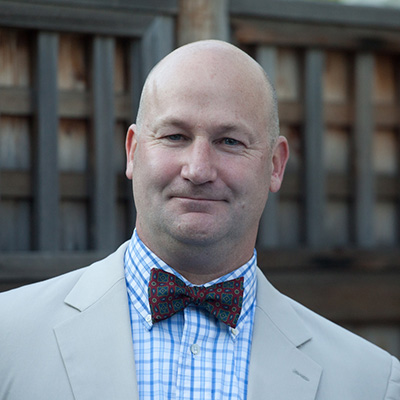
Tilman Fertitta is all in. After more than two years of
negotiations to take Houston-based Landry's Restaurants private
and become the sole owner of the near-300-unit casual dining,
hospitality, gaming and entertainment company, the deal finally
got done in early October, 24 years after he was named company
president and CEO. Fertitta says his passion is making deals
and this was undoubtedly his biggest.
But he wasn't done - not by a long shot. Within weeks of
closing the $1.4 billion transaction, Fertitta proved again
that he is one of the top dealmakers in the restaurant business
by acquiring both Claim Jumper, a casual-dining chain with
locations throughout California, and Bubba Gump Shrimp Co., the
32-unit international restaurant chain inspired by the
Oscar-winning 1994 movie "Forrest Gump." Those moves followed
the acquisition of upscale dining chain The Oceanaire Seafood Room earlier in the year. In two of those deals, Fertitta saw
promise where others saw struggling properties operating in an
industry hit hard by the economic recession. The third was
simply Fertitta jumping on a good opportunity, a talent he
takes great pride in.
Three acquisitions in one calendar year might seem an
overwhelming proposition for most companies, but for those
following the 53-year-old, father-of-four, high-profile
Houstonian (Fertitta owns 55 restaurants in the
Houston-Galveston area alone) and his business dealings,
nothing comes as a surprise.
"He's passionate, creative, accomplished - Tilman is an
operator, he operates the hell out of everything he owns," says
Dave Jacquin, managing director of North Point Advisors, a San
Francisco mergers-and-acquisitions (M&A) consulting firm
that worked with Landry's during its 2000 acquisition of
Rainforest Café for $60 million. Jacquin says the
once-struggling chain is probably worth $400 million now.
"He's gotten very good at buying chains and making them
better. And he likes seafood. Seafood is a big space and
there's not a lot of good competition in it," says Jacquin,
adding that North Point is involved with about half of all
restaurant industry M&A activities. "Seafood is in his
blood; he knows it and understands it and he thinks a lot of
people don't do it well. If you go to a Chart House, you don't
go back to Red Lobster."
Fertitta first got into the foodservice game in 1986, hired
as a real estate specialist by Landry 's, a single restaurant
looking to expand. Within months, he invested in two Houston
restaurants, Willie G's and Landry's, and within three years
the budding chain issued its first IPO. Under Fertitta's
leadership, Landry's became a corporation that today has assets
estimated at $4 billion.
A hospitality and retail star in an oil-tycoon town,
Fertitta approaches risk and day-to-day operations with
meticulous preparation, keen timing and spectacle befitting the
glamour of his crown jewel, the behemoth Kemah Boardwalk
southeast of Houston on the Gulf of Mexico shore. There sits
one of four Aquarium restaurants, home of the "underwater
dining adventure" replete with floor-to-ceiling views of more
than 100 species of colorful tropical fish. Other Aquarium
sites are in Denver, Houston and Nashville, Tenn.
In Fertitta's world, a restaurant is more than a kitchen,
tables, silverware and good food - it's entertainment and real
bang for the buck. That's why Fertitta, a minor partner in the
National Football League's Houston Texans franchise, is also so
heavily invested in gaming and in recent years completely
revamped and rebranded the Golden Nugget Hotel and Casino in
Las Vegas and Laughlin, Nev., which are home to several of
Landry's bars and seafood and steakhouse chains. The resorts
now have a more updated, upscale feel to them and Fertitta is
excited about the potential, even with the gaming industry in a
funk.
"We like the gaming business. We like the hotel business. We
like the seafood business. We like the amusement business,"
Fertitta told SeaFood Business in a late November interview.
"We're very opportunistic. That's why we make a lot of money
and that's what we're gonna do. The consumer is out spending
money today."
Getting better all the time
Even Fertitta, a Rolls Royce and Bentley dealership owner
who exudes confidence, grudgingly admits there were times he
had doubts that his bid to take Landry's private would come
together. It's no wonder, as the process took several twists
and turns along the way.
Fertitta's original bid in 2008 for $24 a share came at a
time when he owned 39 percent of the company, and the remaining
shareholders rejected it despite mounting debts near $1
billion. Subsequent bids fell back to around $12 a share during
the roughest periods of the recession before coming
back up to
$21, $23.50 and then eventually the final price of $24.50.
"I paid a higher price because business got better," says
Fertitta, alluding to a recovery in the restaurant
industry.
The economy wasn't the only concern: Lawsuits filed by
fellow Landry's shareholders followed the takeover bid. William
Ackman, head of New York-based hedge fund Pershing Square
Capital Management LP and a 10 percent shareholder at the time,
was particularly vocal in his opposition to the deal; a
settlement with Ackman was the final step in Fertitta's
privatization. And about 18 months after Landry's peeled off
120-unit chain Joe's Crab Shack in 2006, the buyer, JCS
Holdings of New Canaan, Conn. (now Ignite Restaurant Group),
sued Landry's, claiming it was coerced into overpaying for the
company ($192 million) by a misrepresentation of the
restaurants' financials. An Ignite spokesperson says the
dispute was settled out of court in 2009.
Nobody said life at the top was easy.
"Going private is the hardest thing to do," says Jacquin.
"It's complicated. There are special committees, all kinds of
attorneys around and hedge funds stepping in. But [Fertitta]
was persistent and did this all in the middle of
a
recession."
Jacquin, however, feels the restaurant industry's comeback
has long since begun, stating that every restaurant chain his
company works with has positive comps, or comparable store
sales, in relation to 2009. This bodes well for Landry's, a
company with 50-plus brands in its stable expected to generate
$1.5 billion in sales for 2010. Even his competitors' success
should benefit Fertitta, at least personally: On the day before
Thanksgiving, he upped his stake in McCormick & Schmick's Seafood Restaurants by 150,000-plus shares. Fertitta is now the
largest single stockholder of the Portland, Ore.-based
restaurant chain, owning about 10 percent of the company - more
than anyone named McCormick or Schmick. (McCormick &
Schmick's stock value
increased roughly $1 per share within a
week of Fertitta's filing with the U.S. Securities and Exchange
Commission, to $8.71.)
Whether he aims to be a more involved stakeholder in
McCormick & Schmick's remains to be seen. He clearly is
expecting more from the restaurant chain, however. Restaurant
traffic should increase "across the industry" in 2011, he says,
adding this caveat: "You're always going to have a few weak
sisters. It's very disappointing that somebody like McCormick
& Schmick's is still running negative 4 to 5 percent comps
when everybody else is positive."
While many Landry's restaurant banners are faring well,
others are in need of repair, such as new asset Claim Jumper,
which Jacquin called "a mess." The 42-unit chain was snapped up
for $76.6 million (including $28.3 million in liabilities and
debt) in a bankruptcy auction; two stores in California closed
in early December.
Fertitta leans on his sense of timing for his deals, jumping
on properties that are either struggling through bankruptcy
(Claim Jumper, The Oceanaire Seafood Room) and can be had at a
bargain, or healthier properties like Bubba Gump Shrimp Co.,
which has expanded overseas in recent years to places like
Kuala Lumpur, Tokyo and Hong Kong. (Ironic twist: Landry's sued
Bubba Gump in 2000 for use of the Rusty Pelican trademark.)
"Landry's is built on strong, iconic locations," says
Fertitta. "That's why Landry's was still successful and grew
even in '08 and '09 because people continued to go out and eat
at great locations. Bubba Gump has iconic locations. Look where
we are: We're not in suburbia. We average over $5 million per
unit and make over $1 million a unit, even today."
Lots to digest
Fertitta's moves can be summed up with one word:
opportunity. Whether a restaurant chain is struggling or
succeeding, just about all
of them have a time and a price for
sale. Fertitta has made a career of picking his next move.
"Sometimes there's just an opportunity. Coming out of
recession sometimes, there just seems to be opportunity," he
says. When asked if he intends to keep up the pace of
acquisitions in lieu of organic growth, he says the timing of
the 2010 deals were simply coincidental.
"If you look at his track record, what he buys he makes
better," says Jacquin, who puts a $200 million value
on Chart
House, which
Landry's bought for $35
million, and a $300
million to $400 million value on Saltgrass Steakhouse, which
was purchased for $75 million. "He's very good at making
risk-adjusted bets. You know, he owns a casino. And remember,
he started with just one restaurant. Now he's worth
billions."
The Oceanaire Seafood Room is already reaping the benefits
of Fertitta ownership. The 12-unit chain's unit-level sales
should be up 50 percent this year, Fertitta says, adding that
he's looking into opportunities to grow the brand.
Wade Wiestling, VP of culinary development for Oceanaire, is
grateful for the change in scenery both in
the boardroom and
the
dining rooms, which are ditching the iconic '30s
ocean-liner theme.
"It's more of a 2010 yacht versus a '30s and '40s supper
club," says Wiestling, adding that Landry's ordered
wholesale
changes to the
restaurant: new china patterns and glassware,
more modern décor, updated bars with more TVs to lure business
travelers - even how wine is presented at the tables.
"We're moving into the 21st Century," says Wiestling, who
says the changes are dramatic but necessary. "Landry's did save
Oceanaire. Without them coming in and making a bid on our small
company we would not be having this conversation right now.
"You gotta change, and what makes Landry's so
successful is
they're not afraid to change. It's not that we didn't embrace
change, but we felt entrapped to the concept and we weren't
adapting to the changing demographics and dining habits over
the past several years."
Growing larger and larger as a company has helped Landry's
seafood procurement, which is handled by five regional managers
across all banners. Fertitta says seafood is key to the
company's ever-changing recipe for success, and isn't afraid to
boast: "We have steak brands, but we prefer seafood because we
feel like anybody can do steak and only a few people can do
seafood and we feel like we do it really well."
Does continual change mean that Landry's shopping spree
isn't over? Will Fertitta, the self-proclaimed "deal junkie"
buy yet another well-known restaurant chain in the near
future?
"I hope not!" Fertitta says with a laugh. "I need to digest
these."
Associate Editor James Wright can be e-mailed at
jwright@divcom.com