


« September 2006 Table of Contents
Trend Watch: The gift that keeps on giving
Restaurants find gift cards an effective way to build traffic and brand awareness
By Lauren Kramer
September 01, 2006
You have only to check your wallet for proof that gift cards
are proliferating with abandon. Most of us carry at least three
at any one time, and their presence is a reminder and an
incentive to return to the retailers whose cards we carry.
If your restaurant does not offer a gift-card program, you
might want to consider adding one. According to the National
Restaurant Association, restaurant gift certificates and
cards are No. 1 among consumers who were asked to rate their
interest in receiving certain gifts, including clothing, books,
CDs, DVDs, flowers, perfume, sports equipment and candy.
That interest was corroborated in a survey conducted by the
Marketing Workshop, in which 47 percent of respondents
indicated a higher preference for a restaurant gift card than
any other type.
"The restaurant industry is one of the fastest-growing
industries in the gift-card space," says Paul Panos, business
development manager at Moneris Solutions.
"In 2004, 7 percent of all gift-card purchases were made at
restaurants, and in 2005, that number went up to 12
percent."
Gift cards can have a very favorable impact on your
restaurant's bottom line, says Karen Renk, executive director
of the Incentive Gift Card Council.
"They drive business into the restaurant, and they're a form
of marketing for a restaurant if the card is branded with its
name and logo," she says.
"Every time that card is distributed, it's a marketing
opportunity. And generally speaking, when a person receives a
gift card to a restaurant and redeems it, they'll spend more
money in that restaurant than is on the face value of the
card."
Gift cards had their genesis in 1995, and their popularity
has exploded. Tower Group data indicates gift-card dollar
volume grew 50 percent from 2002 to 2003. Future growth is
estimated to be more than $90 billion in sales by 2007.
A February 2005 post-holiday gift-card survey commissioned
by Deloitte & Touche USA showed that the number of gift
cards received per adult increased more than 20 percent from
2004, and that the redemption of those cards likely boosted
retail sales by an estimated $18 billion.
"It's important to note that consumers are likely still
holding on to another $9 billion of unredeemed value on their
cards," says Tara Weiner, national managing partner of the
Consumer Business Industries practice at Deloitte & Touche
USA.
The survey found that 33 percent of respondents received at
least one gift card to a restaurant or fast-food establishment,
valued between $32 and $78.
Sixty-two percent of gift-card recipients spent more than
the face value of the card, which led to the survey's
conclusion that "the unused cards, once redeemed, have the
potential to add another $13 billion or more to retail sales,
based on the buying trends discerned."
There are few situations where it doesn't make sense to have
a gift card program, says Panos. One is a cash-based business
that does not accept credit cards.
"You'd need a terminal that already accepts credit cards, or
a PC-based solution that would allow software to reside on the
PC or a Web-based solution," he says.
It is easier to choose a package from one of various
gift-card-program providers than to try to create a gift card
program yourself.
"The gift-card world is still evolving," Panos says. "It
hasn't found a standard format, especially in the
small-business world, and pricing varies from a per-card basis
to a per-transaction basis."
Several legalities also must be considered before finalizing
a gift-card program. For example, certain states prohibit the
appearance of an expiration date on the gift card, and service
charges have to be disclosed.
"It's best to start with your attorney," cautions Renk.
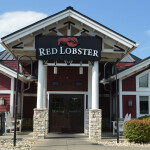
One seafood restaurant chain that has done a commendable job
on its gift cards is Darden, parent company of Red Lobster.
"They have a very successful gift-card program, and theirs
is a restaurant gift card of choice, especially in the
incentive field [for employee motivation or rewards]," Renk
says. "That's because the gift cards are interchangeable at the
company's various restaurants, which makes them very effective,
especially for an incentive application."
Darden initiated its gift-card program in September 2000 and
sells its cards at major retailers like CVS and grocery stores,
online, at its restaurants, on order by telephone and in bulk
through its corporate offices.
"[Gift cards do] have an impact on our business," says
Denise Wilson in Red Lobster's media-relations department,
though she can't comment on how great the impact is.
Not everyone is thrilled with Darden's gift cards, however.
The Federal Trade Commission notified Darden Restaurants last
month that the company was violating a law prohibiting unfair
or deceptive practices regarding gift cards.
That's because Darden purportedly failed to disclose that
its cards lose value because of a dormancy fee if not used for
24 months.
Darden indicated that the FTC had suggested a payment of $31
million to settle the issue, and that if negotiations were
unsuccessful within a 30-day period, the FTC would sue the
company in federal district court, according to an Aug. 3
article in the Orlando Sentinel. Calls to Wilson were
unanswered at press time.
Buckhead Life Restaurant Group in Georgia moved eight years
ago from paper gift certificates to a gift card it calls the
Ultimate Card. The program "is definitely a significant part of
our bottom line," says Stacie Hanna, Buckhead's director of
marketing.
Valid at all 12 of the group's restaurants, the rechargeable
Ultimate Cards can be purchased online, by telephone, at the
company's corporate office and at the individual
restaurants.
"Redemption of our cards is extremely high, and that's what
we want, because it's a great marketing avenue," she says.
"When the cards are in their hands, it makes customers
choose to dine in our restaurants."
The bottom line is that gift cards are desirable, Renk
notes. "They're convenient, they offer choice, and they're
preferred over giving cash."
Contributing Editor Lauren Kramer lives in British
Columbia