

« June 2006 Table of Contents
One Man's Opinion: Fish business gets fishier
By Peter Redmayne
June 01, 2006
It's no secret that people in Florida love their grouper.
Woody's Waterfront Cafe and Beach Bar in St. Petersburg has 10
grouper dishes on the menu, including the house specialty, the
"Grouper Grope," a sandwich with a grouper fillet that can be
ordered fried, grilled or blackened.
Guests also can try "Buffalo Grouper," a fillet that is
"deep fried and coated in tangy Buffalo sauce, then topped with
bleu cheese."
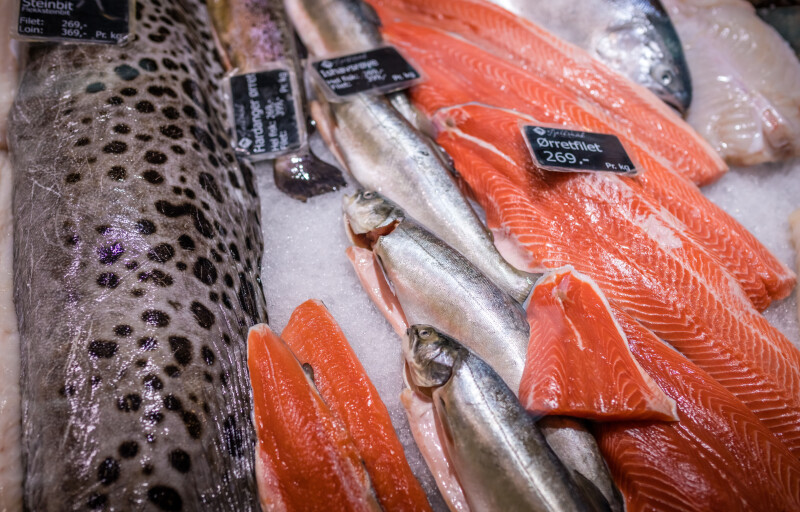
Now, since good grouper is a very mild piece of whitefish,
what you taste is the fixins' and not the fish. And because
grouper is also a relatively expensive fish, it's a
time-honored tradition in the Sunshine State to pass cheaper
whitefish fillets off as grouper. If you can pull it off, it's
good money.
That's what Danny Nguyen, the VP of Panhandle Seafood in
Panama City, Fla., allegedly did (see Late News this issue,
page 4).
According to an indictment filed in May by a federal grand
jury in Florida, Nguyen imported more than 1 million pounds of
basa from Vietnam and sold it as grouper. Not only did Nguyen
increase the value of his fish, but he and his Vietnamese
exporters, who were also named in the indictment, avoided a
hefty tariff that was slapped on Vietnamese basa exports in
2003.
While fraud in the fish business is hardly breaking news,
there is one intriguing new angle in this case. According to
the office manager at Panhandle, who turned informer for the
feds, some of Panhandle's customers knew that the grouper they
were buying was not really grouper after all.
The fact that one of the nation's largest foodservice
distributors was named in the affidavit as one of the buyers
caused more than a few heads in the seafood industry to
turn.
From time to time, members of the National Fisheries
Institute, the seafood industry's only national trade
association, have complained that the seafood industry gets a
black eye when consumers hear about the latest fish scams in
their local paper or on TV.
Since the regulatory agencies like the Food and Drug
Administration haven't shown much interest in helping the
seafood industry clean up its act, NFI stepped into the breach
last year and created an "Economic Integrity Task Force." How
effective this will be remains to be seen.
Besides the fact that NFI's effort is voluntary and has no
enforcement mechanism, many of the fishiest people in the fish
business are not NFI members anyway. As more of the U.S.
seafood supply is imported from Asia, legions of small
importers like Danny Nguyen have popped up, eager to make a
quick buck, sometimes at the expense of their customers.
But what is especially disconcerting is the possibility that
more buyers further down the distribution chain are taking
advantage of consumers. More retailers, for example, are
complaining that their competitors know very well that they are
buying adulterated seafood in order to get wholesale product at
the lowest possible price.
Screwing consumers has never been a good business model for
selling seafood. But it's always been - and probably always
will be - a headache for the industry, since neither the
industry nor government agencies have shown they can stop
it.
So next time you're in Florida, you may want to steer clear
of the cheap grouper.
Contributing Editor Peter Redmayne lives in Seattle