

« June 2006 Table of Contents
In the Kitchen: Duke’s looks to Alaska for fish
Seattle chain ensures quality through strong ties with fishermen and processors
By Joan M. Lang
June 01, 2006
At Duke's Chowder House, it's all about the source -
especially the one called Alaska. That sourcing strategy has
turned the six-unit, Seattle-area chain - which started in
business as a chowder specialist - into an all-around seafood
powerhouse.
The menu and Web site for Duke's are peppered with
references to wild Alaska salmon and halibut. As Alaska's
salmon rivers open, each in its season, fresh-sheet specials
celebrate the unique flavor and texture of each species of
salmon.
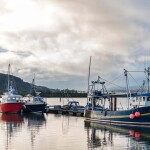
And every spring, owner Duke Moscrip and Executive Chef Bill
Ranniger take a trip to Alaska to meet the boat captains and
processors who sell their catch to Duke's for use the rest of
the year.
"As the rivers open, we'll focus our menuing and buying on
[Alaska salmon]," says Ranniger, a lifelong Seattle resident
who first learned to love fishing with his dad on the San Juan
Islands.
"Like wine, each salmon has its own identity."
In the wintertime, when neither halibut nor salmon is in
season, the restaurants' fresh sheets tout fresh crab, scallops
and other species. It's all part of an evolving effort to
connect the producer to the plate with every category on Duke's
Pacific Northwest menu, and to offer the very best quality at
all times.
"Last year, we bought 32,000 pounds of Stikine River king
salmon off one boat and had it processed for us for when we
can't buy fresh," says Ranniger. "This year we'll probably buy
50,000 pounds."
They may also do the same with halibut.
The salmon is filleted and frozen in situ to Ranniger's
specs, then trucked down to Clackamas, Ore., to the Pacific
Seafood Group, which distributes the fish to Duke's chefs on an
as-needed basis throughout the balance of the year.
Having bought their salmon from a distance in the past,
actually seeing the Stikine River was a revelation for Moscrip
and Ranniger.
"Talk about the beautiful, pristine waters of Alaska," says
Ranniger. "We took a jet boat up the river about 30 miles to a
glacier that was spectacular, just amazing. The eagles were as
thick as crows. That's how we decided to focus on product from
Alaska - cod, halibut, salmon, crab."
The strategy gets them what they believe is the best
possible product year-round. "And we get great prices too,
because we guarantee buying the entire catch."
Moscrip and Ranniger have always been concerned about
sustainability issues (farm-raised salmon is verboten, for
instance), and now that Duke's has reached critical mass, they
have the buying power to set their own specs. When the first
Duke's opened more than a dozen years ago, the menu was heavy
on the clam chowder and fish and chips.
These items are still stalwart customer favorites (in fact,
the restaurant has won so many Best Clam Chowder awards that
it's been barred from further competition in the Seattle
culinary circle for a while), but the fresh sheets have become
more important through the years.
Ranniger spends several weeks testing and developing salmon
and halibut items for the various season openings, such as
Cedar Planked King Salmon or Broiled Stikine River King Salmon
with goat cheese and fresh blueberry beurre blanc, then travels
to the restaurants to demonstrate all the specials.
With one chef and two sous chefs in each restaurant, there's
plenty of talent on hand to train the crew to produce a roster
of sophisticated seafood presentations, and each kitchen staff
is responsible for passing that information along to servers as
well.
When the catch is on, each unit chef selects five to eight
fresh specials a week from Ranniger's large "inventory" of
seafood specialties and also has creative freedom to experiment
with his own specials.
Staff training becomes particularly crucial with the weekly
fresh sheet.
"You have to make sure that the waitstaff understand the
importance of what they're selling - where the fish comes from,
why it's special, how it's prepared," explains Ranniger.
Loyal customers reap the benefits. Moscrip also started a
newsletter, which now goes out to some 60,000 members of the
Duke's fan club and includes recipes, photos of Alaska and
Ranniger's notes from the rivers. (Ranniger also owns a small
seasonal restaurant and campground on the Columbia River that
is part of a summertime concert venue.)
Salmon and halibut from Alaska now constitute almost a third
of Duke's total sales, translating to about 100,000 pounds of
salmon and 90,000 pounds of halibut a year.
"We still sell a lot of fish and chips and a lot of chowder
and a lot of fresh salads," says Ranniger, "but salmon and
halibut are getting really important to us."
The more he learns about seafood from Alaska, adds Ranniger,
the more he has come to realize how well the resource is
managed. "They know how to open and close the season in order
to control the production," he notes
In fact, sustainability has become a mantra of sorts around
the Duke's headquarters, between Ranniger's and Moscrip's
efforts.
"If you're going to be serving food that's wild, you have to
embrace the idea of stewardship," says Ranniger. "In the case
of fish, that means following it from the water to the plate
and knowing what happened to it at every step of the way."
He is trying follow the path of more menu items from their
origin, not just to ensure consistent quality and price but
also sustainability. For instance, Duke's is purchasing more
local fruits and vegetables, such as Pacific Northwest berries,
and is using staff meetings to educate both cooks and servers
on their benefits.
In the process, he's moving the entire menu into a more
contemporary, ingredient-driven ideal that is very much in
keeping with what Duke's management believes customers today
are looking for.
As far as working more closely with the Alaska fishermen and
local processors, Ranniger sees that relationship only
increasing.
"It's a sustainable process, from a sustainable source. And
that makes us feel food about what we're doing - for the
environment and for our customers."
Contributing Editor Joan M. Lang lives in Cape Elizabeth,
Maine