

« July 2006 Table of Contents
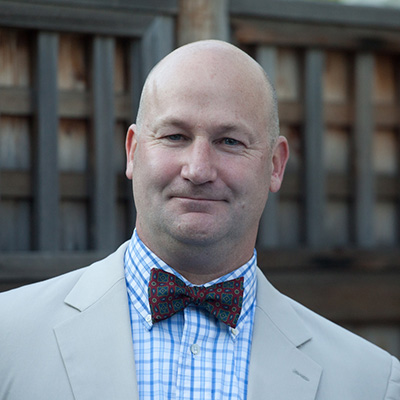
One on One: Rex Clothier
Senior VP, procurement, center of plate, U.S.
Foodservice
By Fiona Robinson
July 01, 2006
Rex Clothier is focused squarely on the future of U.S.
Foodservice's center-of-plate procurement department. He has
little to say about the rebate scam that put the broadline
distributor in the headlines a few years back, except that the
company's entire upper-level support staff is new, and he is
working long hours while the procurement department is in
"rebuilding mode."
It's been almost three years since an internal audit at
Ahold discovered accounting problems related to its U.S.
Foodservice subsidiary. Four USF executives and nine vendors,
including three seafood executives, pled guilty to charges of
conspiring to falsify U.S. Foodservice's and Ahold's books.
Seafood veteran Clothier was hired in 2005 to take over the
embattled center-of-plate procurement department.
There's no question Clothier is in the right position at the
right time in his career. The Alaska native grew up gutting
fish on a "slime line" at a fishing resort in Ketchikan and
later became a fishing guide. He received a degree in finance
from the University of Alaska, Fairbanks, in 1987. After
college he worked as a production foreman at Unisea's Dutch
Harbor plant.
He left Alaska to attend Thunderbird: The Garvin School of
International Management, where he studied in Phoenix and
Tokyo. Upon finishing grad school in 1991 with a masters in
international marketing, he returned to Unisea to train
distributor reps and territory managers about seafood. He then
became Unisea's Canadian national sales manager.
Clothier left Unisea in 1999 to work as Darden Restaurants'
director of crab and shrimp for two and a half years before
being named senior director of commodity purchasing (for
chicken, beef and pork). At Darden he focused on resource
utilization, which has helped him in his new role at USF.
Clothier has his work cut out for him. USF operates 67
broadline divisions, five standalone beef operations
(stockyards) and 12 multi-unit divisions that were recently put
under the North Star Foodservice brand name. USF Broadline
serves independent restaurants and the healthcare, lodging,
gaming and government sectors. Seafood customers have included
Brinker International.
I spoke with Clothier in early May as he prepared his wife
and two kids for a big move to the Windy City.
Robinson: What prompted your decision to join U.S.
Foodservice?
Clothier: I enjoyed the time in my career working with
territory managers and focusing on working at the street level
in broadline. I was impressed and excited to have the
opportunity to work with John Inwright, chief procurement
manager at U.S. Foodservice, to set up global procurement.
With all their hardships in recent years, I was very impressed
with the new management team that was onboard to manage through
the road to recovery.
What does your job entail?
Most of what I focus on is developing supply-chain
solutions. We try to build a relationship [with suppliers]
close to the resource, called our Resource to Recipe strategy.
Early on there was a lot of development overseas. I've had
quite a bit of travel, as has Greg Brown. I'm responsible
for
center of plate, and Greg is my
director of seafood.
Any big changes in store for USF?
We're all moving to Chicago [this month]. All of the USF
procurement functions are going under one roof and will be part
of a new company-within-a-company called Monarch Foods. We'll
develop our own brand and build supply-chain strategies across
all categories.
When I came onboard, I focused on getting out into the
divisions and putting together sales strategies on specific
product categories. Now we have a more integrated approach on
the procurement side. We'll focus on sourcing strategies and
more focused procurement initiatives. We'll have a brand team
to focus on strategic product introductions. We'll also have an
R&D department, which is new to us. [We'll have a] much
more integrated approach to our brands and mapping what our
customers are looking for. Our whole enterprise is
customer-centric.
Are there any changes planned for the seafood program?
When you look at our brand strategy, it's to provide clearer
choices. What's in a box? You have to know. When a fish comes
out of water, [the quality] gets nothing but worse. When you
get to the back door of the customer, you have to know what's
in the box that you are selling.
We used to have 60-plus brands [not just seafood], and it
made it more difficult to focus. Now we have 20 power brands;
the two seafood brands are Harbor Banks and Bluewater. Harbor
Banks is upper quality, and Bluewater is a structured value
tier. We have a strong vendor pool with commodity product.
Our strength has been heavily skewed to commodity. I think
you'll see a focus on R&D to try to find ways to make more
value-added products available.
What percentage of food sales does seafood represent, and is
that
increasing?
Close to 5 percent is seafood. Of the $19 billion food
total, seafood is close to $1 billion. It's an area we've
identified for growth because of the health benefits and trends
in the market. It's an area we can be quite strong in.
How many seafood vendors
does USF have?
Thousands. The value proposition is for us to find vendors
that can support a bigger percentage of that. About 550 to 600
seafood vendors are active.
What is USF's corporate philosophy about seafood
purchases?
The foundation of our entire procurement, and entire
organization, is integrity, accountability and responsibility.
On seafood, we're trying to drive out short weights, mislabeled
species, transshipped products. To my knowledge, we're one of
the only broadliners that is testing its finished product. Most
organizations aren't taking as proactive a role as delivering
economic integrity - that makes us stand out a little bit.
I'm consistently frustrated when I get into the marketplace
and see a lot of short-weighting and substitution. And
customers are accepting of it.
There's a huge push to get closer to the resource. Resource
to Recipe is a completely new strategy. We're putting together
direct contracting with processors overseas.
In terms of Alaska product, we're focusing on working with
folks who control the resource and with bricks-and-mortar
companies that are in it for the long haul.
What is U.S. Foodservice's approach to developing a
sustainable-seafood program?
We are learning from our sister companies in Europe and
Ahold USA. They have resource-intense practices. We've had
global meetings already with different arenas, which have been
more of a knowledge transfer than a directive [from Ahold].
In three to five years, there will be a huge emphasis on
sustainability and chain of custody and our ability to have
visibility back to the source [to ensure] that all the right
practices are being made.
What do you like best
about your job?
I'm proud of the seafood industry and the right practices
that take place. I'm ecstatic that I've been empowered to take
the hardline economic-integrity stance that I have. Regardless
of why our company has taken a high road to integrity and
sustainability, it's a pleasure to have it supported
unequivocally through everything I do, every day.
What do you expect the seafood industry will be like in 10
years?
I think the seafood industry and the food industry as a
whole will be much more globalized. We'll continue to see more
consolidation on the supply side and larger companies will get
more active in the seafood category. It's a much smaller arena
that we play in; companies will be more engaged at the
resource.
What about the seafood program at USF?
We'll work with other seafood companies to participate in
good stewardship initiatives. We really need to help the
industry instead of just taking from it. That's something that
I suspect our vendor community would acknowledge, but others
may not know it's going on.
Editor Fiona Robinson can be
e-mailed at
frobinson@divcom.com