

« August 2006 Table of Contents
Editor's Note: COOL scofflaws may get a surprise
By Fiona Robinson, Editor in Chief
August 01, 2006
Retailers and suppliers who've hoped and prayed that
country-of-origin labeling would not be enforced will have a
rude awakening this month when state inspectors come knocking
on their door. COOL, which went into effect in April 2005,
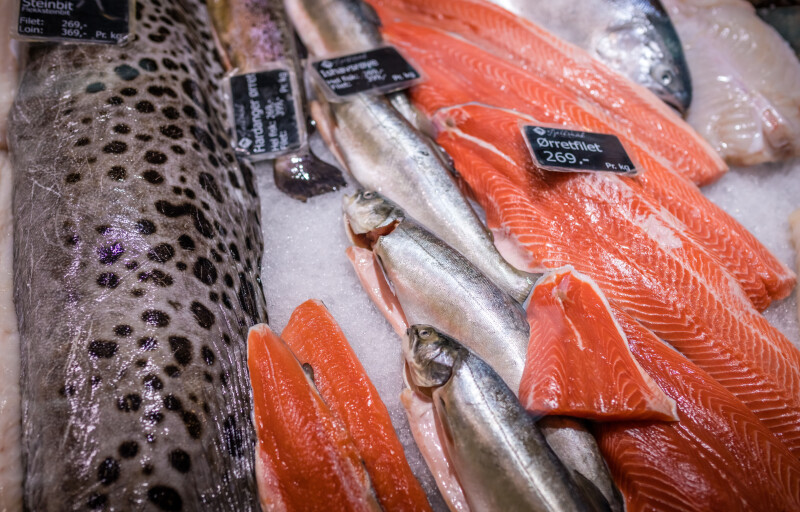
requires retailers to label seafood as to its country of origin
and whether it's wild or farm-raised. Additionally, both
retailers and their suppliers are required to keep supply-chain
records for up to one year. COOL was part of the 2002 Farm Bill
and strongly supported by Alaska Sen. Ted Stevens to protect
his state's seafood industry.
The U.S. Department of Agriculture, charged with enforcing
country-of-origin labeling, is sending inspectors to retailers
in 14 states to verify compliance with the law (see Newsline
story, page 10). Inspectors will likely audit seafood suppliers
in the fall, according to the National Fisheries Institute.
It will be very interesting to see how many supermarkets
(independent fish markets are exempt) are actually labeling the
seafood in their cases, and how many suppliers will be able to
produce an entire year's traceability records showing the
source, production method and other COOL record-keeping
requirements. Retailers and suppliers who have yet to comply
may want to visit the Agriculture Marketing Service Web site at
www.ams.usda.gov/cool for a rundown on the rules.
After the April COOL 2005 deadline, the mainstream media
paid a lot of attention to seafood labeling at retail, which
fueled a year's worth of various exposés on seafood-labeling
scams. Expect the same type of media coverage when COOL
compliance rates are made public, whenever that happens.
Headlines about consumer fraud sell newspapers and
magazines.
There will always be retailers who carry product that is
inadvertently mislabeled. Many retailers are more concerned
about their employees showing up to work than whether the
salmon is labeled as wild or farm-raised. One large supermarket
chain here in the Northeast has been running radio ads about a
special on wild Atlantic salmon. Clearly, seafood-labeling
errors occur everywhere and at all levels of marketing.
Errors aside, it's the retailers' responsibility to comply
with COOL, whether they want to or not. A decade ago processors
went through the same phases of denial, acceptance and eventual
compliance when HACCP (hazard analysis of critical control
points) was rolled out. Retailers and suppliers who haven't
complied with COOL would do well to jump to the compliance
stage pretty darn quickly.