

« November 2007 Table of Contents
One on One: Chris King
By Steven Hedlund
November 01, 2007
Chris King isn't crazy about titles, especially his own. As
seafood specialist for Town & Country Markets for the past
three-and-a-half years, King is in charge of purchasing,
merchandising, quality control and pricing at the retailer's
six western Washington stores. But ask him what he does for a
living, and he'll likely say he's a "people specialist."
King, 49, honed his people skills while learning the ins and
outs of the seafood trade at an early age. In 1974, King took a
job packing orders and loading delivery trucks at Pacific Fish
Co. in Seattle. He worked there on and off during high school
and college, eventually dropping out to work full time. "I
liked the money better - fast cars, fast women," quips King,
whose father was an Alaska salmon fisherman. "It became a
career."
In 1979, King landed a job at Seattle's Pike Place Fish
Market. He started out bagging clams and stocking salmon in the
display case for $50 a day and worked his way up to become one
of the market's managers.
In 1992, King gave the corporate life a shot, as
seafood-department manager of Top Foods in Tacoma, Wash. But it
wasn't for him. "I wanted to get out and sell rather than spend
time in an office," he says. In 1995, Queen Anne Thriftway (now
Metropolitan Market) offered him a position at its Tacoma
location. "When I started, [co-owners Dick Rhodes and Terry
Halverson] said, 'Chris, you know what you're doing, just go do
it.' That was refreshing."
After a second stint at Pike Place Fish Market beginning in
2001, King joined Town & Country, a locally owned retailer
that operates three stores under the Town & Country banner
and three under the Central Market name. Central Market boasts
30- to 40-foot fresh-seafood cases and 30-foot frozen-seafood
cases, while Town & Country's seafood departments are more
scaled down. The family-oriented company is committed to its
employees, customer service and high-quality seafood, says
King.
I spoke with King to discuss retail seafood, the importance
of customer service and Town & Country, which is
celebrating its 50th anniversary.
HEDLUND : What draws you
to seafood?
KING: People. I have a passion for people, then food. I'm a
people person. I love developing relationships with customers,
having a great time selling a great
product.
I'm really simple. All you have to do is be honest and
integral and have a sense of humor. There are far too many
serious people out there. That's not me.
What sets Town & Country apart from the competition?
[The owners and board members] involve everyone in
everything they do. They'll ask first before they make a move.
We're building a new [Central Market] store in Issaquah
[scheduled to open in 2009]. Most corporate [executives] say,
"We're going to open it. Here's the blueprint." Our process is
the opposite of that. The owners have been going around to what
we call cross-store meetings, where all the department heads
meet - seafood, produce, etc. - and asking us what we see in
the future.
Who are your competitors?
No. 1 is ourselves. We compete against ourselves and our own
limitations. But we pay attention to Whole Foods Market, we pay
attention to Metropolitan Market, we paid attention to Larry's
Markets when they were around. [ Editor's note: Larry's was
split up in bankruptcy court last year. ]
Why do most conventional
supermarket chains maintain
loss-leader seafood departments?
They're there for show, and that's intentional. They're not
there to make money. It's pretty common in grocery stores. But
that's not common for us. It's not about higher gross margins.
It's about offering value of the best products to our
customers. In other words, we're not putting chemically treated
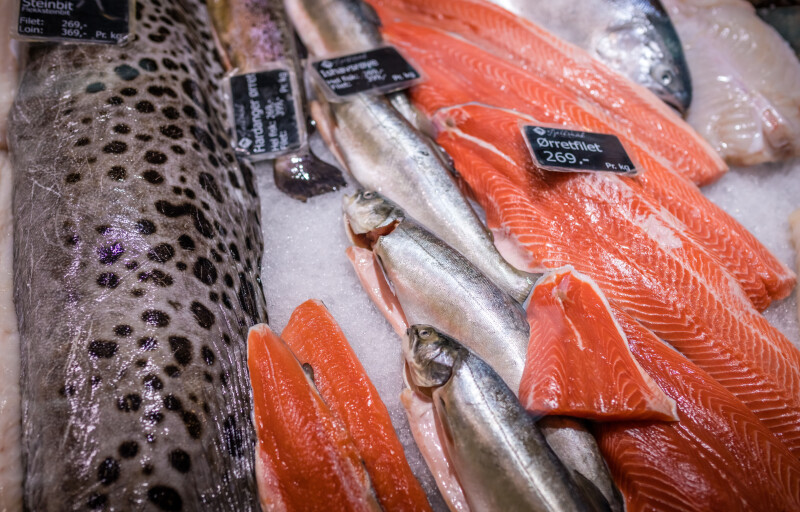
scallops on ad. We're using what we have. If it's troll king
salmon, sockeye salmon or [dry] scallops, that's what we're
putting on ad. We reward our regular customers for shopping
with us. If we continue to think we need to get top dollar for
everything we sell then we're missing the boat. We don't have
to hit a gross on everything we [sell] to make money. It's a
fallacy.
What's the biggest challenge
you face as a seafood
retailer?
Politics. I try not to [get involved] with the politics of
the seafood industry. But I do form my own opinion through
research on sustainability. The reason I don't align myself
with anyone is because the information changes so quickly.
What's true today is not true tomorrow. The first concern for
me is people, and the second is fish. We can't have people
without good fish. I'm about people. If I have a question, I
call my vendor.
Aligning myself with integral [vendors] is really what it's
all about. They say, "This is all we can get for now. That's
because we're maintaining the fishery." My seafood-department
heads don't freak when they can't get something, whether it's
because of a weather issue, sustainability issue or quality
issue.
How does Town & Country ensure the Chinese seafood it
sells is free of illegal veterinary drugs?
Eastern Fish [in Teaneck, N.J.] already had the testing in
place [before the Food and Drug Administration's import alert
on Chinese seafood]. So we've been proactive, working with
Eastern to procure quality product. But politics kick in. It's
the flavor of the month right now, and we have to ride it out.
Some of it's good, because it uncovers [Chinese seafood
producers] that aren't integrally operated.
Why does Town & Country not carry farmed salmon?
Our company took a stand to carry only wild salmon before I
got here. But I will say it's probably something that needs to
be looked at again by our company. The truth is sustainability
and price come in different forms, and if we're not looking at
all of it then I think we're missing the boat.
Associate Editor Steven Hedlund can be e-mailed at
shedlund@divcom.com