

« September 2008 Table of Contents
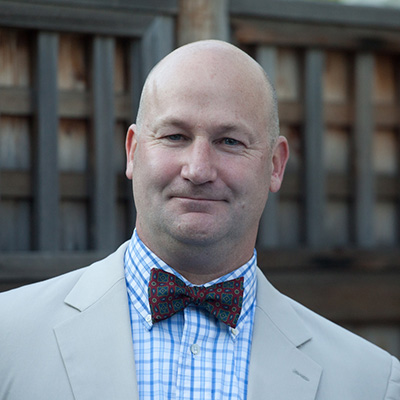
One on One: Jeremy Anderson
By James Wright
September 01, 2008
Jeremy Anderson, like many successful chefs before him,
worked in restaurants as a teenager before steadily climbing
the ladder - all the way from washing dishes to creating the
cuisine that sits upon them. But even as the executive chef for
the last five years at Elliott's Oyster House, a popular
Seattle seafood restaurant, Anderson found himself scrubbing a
few pots every now and then. It's all about being part of a
team, he says.
Anderson, 35, was promoted to director of operations at
Consolidated Restaurants in July, trading in his chef whites
for a shirt and tie and is now pushing the buttons behind the
scenes at four popular Seattle restaurants: Elliott's,
Metropolitan Grill, Union Square Grill and DC's Grill.
Anderson's latest move is no surprise to those who know him. As
a graduate of Washington State University's hotel and
restaurant management program and the two-year occupational
program at the Culinary Institute of America in Hyde Park,
N.Y., he has the credentials to run a successful restaurant
company. And having worked on and off at Elliott's since age
15, he has a passion for seafood that simply can't be
taught.
"I grew up here," says Anderson, referring to the waterfront
restaurant that's served as a showcase for Pacific Northwest
seafood for three decades. His grandfather was the executive
chef at Elliott's years ago, so the Pier 56 eatery feels like a
member of the family.
After shucking oysters at Elliott's in the summers during
his time at WSU, he and his wife Lisa packed up a U-Haul and
headed east to the CIA. He also ran kitchen operations at a
nearby Outback Steakhouse when the chain was in its growth
phase in the 1990s. After that, he spent four years as chef at
Union Square Grill back in Seattle, before moving down to the
waterfront to Elliott's.
I caught up with Anderson in late July to talk about his
budding management career.
WRIGHT: How has your role
at Consolidated changed
with the
new title?
ANDERSON: Honestly, [I'm] not too far removed. In today's
world, you're not just the chef anymore. You're involved with
writing menus, marketing, training and coaching. A chef isn't
just the guy behind the line; he's become more of a manager -
with a passion for food. The food is what keeps you going.
Everything else is just business. The biggest difference is I'm
doing it for multiple concepts. I'm more of a resource to the
teams, not just a finger-pointer. I'm here to direct the goals
of the company.
What I learned as executive chef has supported this role.
It's a natural transition. I just have to get used to putting
on a nice shirt and pants. For 10 years I put on my black pants
and white T-shirt with the chef coat. Now I have to ask my
wife, 'Does this shirt look OK?'
It's a new challenge and a new opportunity to get out of my
comfort zone. But once a chef, always a chef - it's in my
heart.
What advantage is there in working your way up the kitchen
ranks?
It's the classical way of moving through a kitchen. You
learn respect for those you work with; you step in their shoes.
No job is easy, but having been in their shoes, you can relate.
And as a manager, they know you're with them.
Will you miss the kitchen every day?
I still have the whites hanging in my office. If I need a
fix, I can go right downstairs to the Metropolitan Grill.
There's nothing better than a fully clicking line of chefs
and the wait staff is on - it's a mental high. The different
senses, colors and textures - if you get bored with it, you're
limiting yourself. It keeps your brain ticking. Your job is
what you make of it; you need to be able to reenergize
yourself.
Describe your four restaurants
in 10 words or less.
Elliott's: Sustainable seafood - the best in the
Northwest.
Union Square Grill: Northwest fare with a great happy
hour.
Metropolitan Grill: Can't get a better steak in the
country.
DC's Grill: Your neighborhood hangout.
How has Elliott's become
such a destination?
It's a combination of great food, service and ambience - and
a great location. All aspects are a component of the dining
experience.
Explain how you create a new seafood dish. Do you always
start with the seafood?
I start with raw product and a concept. You have a palette,
the plate. I look at seasons, flavors, textures and colors and
how they mix without overshadowing the product. A nice piece of
Dungeness crab might not need anything added to it.
How much experimenting
do you do?
I'll write up how it would look on a menu before I start the
recipe; I do it kind of reversed. I'll determine what I'm going
after, and I'll make sure the flavors work in my head, and then
I'll make it and write down what I do. Not so much trial and
error anymore, you get a vision and you go for it. The test is,
will it sell? Can you execute it?
Is the company committed
to selling only wild salmon?
The whole company. I do all the contract buys for wild
salmon. Right down to the fish and chips joint. I just
committed yesterday to buying 40,000 pounds of Yukon River
ketas (chum). Yukon River chum is not your run-of-the-mill
chum. The oil content and the color are both different. With
the overall salmon woes, I thought ketas would provide
education to our guests, and value. Don't need to charge an arm
and a leg for that fish.
What else is new?
We're doing [retail packages of frozen] Elliott's Dungeness
crab cakes, a dish I created. It's already in grocery stores
locally. We finished the photo shoot for the box this
morning.
Is this your dream job?
The chef in me will never go away. I may have a different
title, but you never lose the knowledge or the credibility
you've earned through the years. Now it's my job to teach
others.
Assistant Editor James Wright can be
e-mailed at
jwright@divcom.com