
« September 2008 Table of Contents
Case Study: Good to be Kings
With rigorous training, Kings grows seafood sales
By Lisa Duchene
September 01, 2008
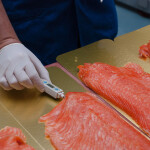
For half a day every month, Kings Super Markets Seafood
Director Tony Ruccio visits one of the Parsippany, N.J.-based
chain's 26 stores to work with part-time associates on how to
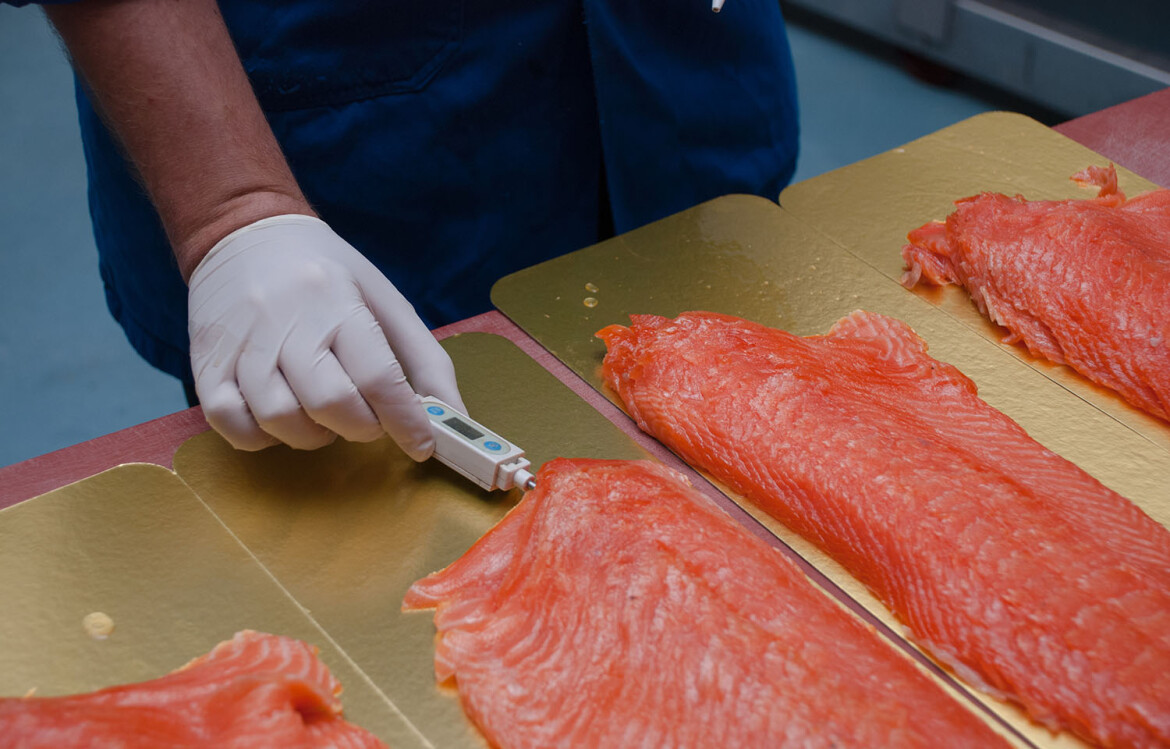
properly fillet and steak fish, shuck oysters and clams, bake
fish and clean crabs. They review information about the
products and details of how the fresh fish is the "top of the
catch."
"If customers come in and want to buy a whole fish and want
it filleted," says Ruccio, "I need to know personally that the
people in the store will do it properly for them."
The monthly refresher trainings are in addition to a four-
to six-week initial training for new associates, plus daily and
weekly bulletins to all seafood managers and associates on
timely seafood topics like the health benefits associated with
seafood consumption, seasonal products and any headline-making
issues like product recalls.
"We put a lot of emphasis and pride in our associates. They
are fully trained and very knowledgeable about seafood," says
Ruccio.
The retailer, which operates full-service seafood counters
in 23 of its 26 stores serving affluent suburbs in northern New
Jersey and Long Island, New York, is known for standing apart
in its perishables quality, merchandising and customer
service.
In Ruccio's eyes, such expertise sets Kings' seafood
operation apart from that of other chains that rely on meat
department employees to cover the seafood department and is key
to the company's seafood success.
In a tough economic year, with soaring food and gas prices,
Ruccio reports Kings' seafood sales, tonnage and customer count
numbers are all up over last year.
"[Kings] holds a unique spot in the market," says Howard
Solganik, a fresh foods consultant with the Culinary Resources
Group in Dayton, Ohio. "No matter how good any of the other
chains get, they'll never be Kings."
Last year, Solganik visited the flagship Short Hills store,
renovated in 2006. "My experience in walking through the store
was a series of 'wows,' from the second you walk in. And
everybody I talked to in the store seemed to know what they
were doing, which is generally shocking."
Kings is known for being ahead of the curve on key trends
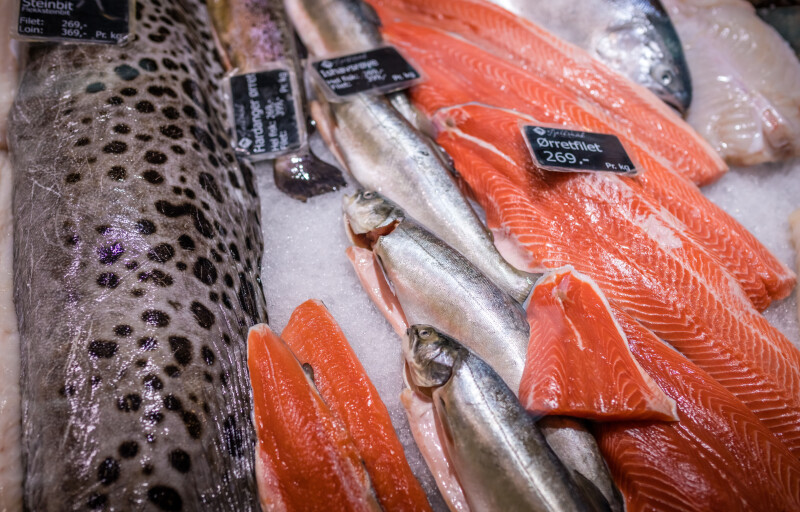
like displaying fish on ice, "European style" (started in
1978), salad bars (added in the late 1970s), an on-premise
cooking school and natural foods (launched in 1995). In the
late 1980s, the company added a prepared foods section, long
before home meal replacement entered the supermarket
vernacular.
Allen Bildner - whose parents and uncles in 1936 opened the
first Kings in Summit, N.J. - told the New York Times in 1987:
"Nowadays," he said, "when we no longer have the corner grocery
store and society is becoming increasingly impersonal, we are
trying to restore a sense of caring to the food-shopping
business."
British retailer Marks & Spencer bought the chain from
the Bildner family in 1988 for $108 to $110 million. According
to Solganik, the chain lost some of its pizzazz while held by
Marks & Spencer, which put it on the market in the late
1990s. In 2006, after several deals had fallen through, the
British firm sold Kings to a pair of New York-based
private-equity firms (Angelo, Gordon & Co., and MTN Capital
Partners) and Bruce Weitz, for about $61.5 million. In addition
to being a co-owner, Weitz is also the CEO and president.
Following the ownership change two years ago, Kings turned
to a new strategy and tagline: "From Every Day to Fabulous
Gourmet."
The new owners, says Solganik, are "in the process of
putting it back to the original Kings and they've done a
spectacular job." The Short Hills store "reminded me of the old
Kings. They're definitely on track now."
Kings' seafood departments vary in size from 15 feet to 30
feet of iced display, plus frozen cases. Seventeen stores
include a sushi program and sushi chef while two of the stores
include a Cooking Studio, offering daily classes and demos.
The displays are raised in the back and the case is built
from the bottom up every day with fresh ice, following a
nightly sanitation of the whole department, says Ruccio. The
seafood counters are staffed whenever the stores are open, he
adds.
Ninety-five percent of the seafood is fresh, never frozen,
and most products are three to four days out of the water.
Kings pays top-dollar and enforces strict purchasing
specifications for hand-selected, hand-cut, top-of-the-catch
fish with no frayed tails or blood spots, says Ruccio.
Kings' seafood selection - fresh finfish and shellfish,
value-added items and some frozen items - spans a repertoire of
about 600 products. On a daily basis, there are 30 to 60
different products in the case, depending on space, quality,
availability and seasonality.
Top-sellers include Alaska wild salmon, two varieties of
Black Pearl farmed salmon (organic and regular) and portions of
farmed Canadian salmon, dry sea scallops and grey sole.
In mid-July, in an online circular tailored to each store,
Kings featured EZ-peel Mexican whole raw shrimp for $6.99 per
pound, littleneck clams for $4.99 per pound, crab cakes for
$3.49 each and sashimi-grade yellowfin for $13.99 per pound.
The "Kings Extraordinary Summer Shrimp Sale" featured 2-pound
bags of 31-40 farmed Pacific white shrimp from Thailand for
$18.88, 26-30 shrimp for $21.68 and extra jumbo, 16-20 shrimp
for $24.48. Ruccio sources the shrimp from a packer who follows
Kings' strict specification including, for example, that most
shrimp in the batch fall in the middle of their size range.
Ruccio favors themed promotions because they help connect to
customers' life experience, keep ads fresh and exciting and
customers trying new things, says Ruccio. He's promoted day
boat cod, porgy, bluefish and sea scallops from a Martha's
Vineyard fisherman. He's also worked with Alaska Wild to source
wild king and sockeye salmon, receiving the fish 48 hours out
of the water, as well as Alaska sablefish, prawns and
halibut.
Contributing Editor Lisa Duchene lives in Bellefonte,
Pa.