

« October 2008 Table of Contents
Top 10 Species: Wild salmon
Buyers warm up to underappreciated species, product forms
By Christine Blank
October 01, 2008
Alaska's salmon runs started out slow, but ended higher than
expected. But that's not the biggest news in the wild salmon
industry right now.
Because of supply and pricing issues in recent years, the
species and product forms of Pacific salmon buyers are looking
for are changing.
"As a result of the strengthening of prices and the high
value of wild salmon, American consumers and buyers are
becoming more familiar with the different species," says Laura
Fleming, communications director at the Alaska Seafood
Marketing Institute in Juneau, Alaska.
For example, because of the fishing closures in California
and Oregon and lower runs of king salmon in Alaska this year,
some buyers are using more sockeyes and pinks for center-of-the
plate applications.
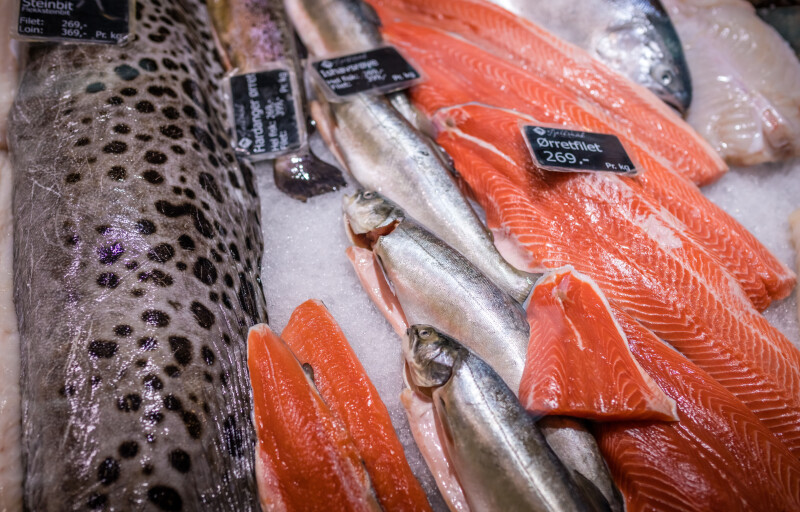
The higher prices of king salmon this year - averaging $8 to
$10 a pound for whole 10- to 15-pound fish at wholesale and as
high as $30 to $40 a pound for Copper River fillets at retail -
some consumers switched to coho, pink and other Pacific salmon
species.
"People don't buy as much salmon as they did before. Or, if
they bought king before,
they will buy coho now because it is
fairly abundant," explains Jon Speltz, VP and buyer at Wild
Salmon Seafood Market in Seattle.
"The king salmon supply took a definite hit and prices for
fresh kings jumped dramatically. If you had to have wild king
salmon, you had to dig deep into the wallet this year," says
John van Amerongen, spokesman for Trident Seafoods in Seattle,
one of the nation's top Pacific salmon suppliers.
As a result, sockeye has become more popular among U.S.
buyers and consumers.
"We had been looking to increase sockeye demand for a long
time. It was traditionally exported more to the European Union
and other areas but
has been more widely expanded in the
United States,"
says Fleming.
"Japan used to be the dominant market for frozen sockeye,
and they are still a solid customer. But the continued
abundance of sockeye in Alaska and our investment in
value-added products has allowed us to move more of it to the
domestic side," says van Amerongen.
"There has been a pretty substantial increase in the pink
salmon supply in the last five years. The high volume species
are going more [toward] frozen or fresh product to meet demand,
instead of in a can," says Chris McDowell, seafood industry
analyst for The McDowell Group in Juneau.
In fact, 80.3 million pink salmon were caught in Alaska
through Sept. 12, according to the Alaska Department of Fish
and Game. The sockeye runs had also yielded 38.2 million fish
by Sept. 12, coho was at 3.4 million fish, and chum had reached
16.6 million fish.
Alaska's total salmon catch had reached 138.8 million fish
by Sept. 12, surpassing the 137-million-fish preseason
forecast.
Alaska salmon supplies are up this year thanks to healthy
salmon runs and government policies, according to ASMI and
seafood buyers.
"So far, it is the fourth largest harvest to date. Overall,
people were pretty happy with the salmon runs," says
Fleming.
"[Alaska is] managing the fisheries so well," says Tom
Sunderland, director of marketing for Ocean Beauty Seafoods in
Seattle. "The pink salmon runs were lower this year, but I
don't think anyone is unduly concerned about it. They believe
Alaska is handling it right."
Still, the canned pink salmon industry is increasingly
sharing the market with the fresh and frozen fillet market.
Half of last year's pink salmon harvest was canned, down
slightly from 52 percent in 2006. Pink prices are also expected
to jump this year, because the catch was lower than last year's
144-million-fish catch, the third largest haul on record.
"There didn't used to be a lot of pink salmon fillets, but
the world has seen what a great value it is," says
Sunderland.
As a result, Ocean Beauty has launched two frozen pink
salmon entrées with sauce
and vegetables under its Sea Choice
brand.
"The big change in Alaska has been the increase in the
ability, or the freezing infrastructure, to produce value-added
product forms, such as fillets," says Ocean Beauty's
Sunderland.
Trident Seafoods has experienced similar success on the
foodservice side with its frozen, fully-cooked pink salmon
portions sold under the Redi Grilled brand. The simplicity of
the product, prepped and ready for pitas and other entrées,
makes it a good seller, says
van Amerongen.
"It has performed so well in our 4-ounce portion that we're
now offering it in a 6-ounce center-of-the-plate cut," he
notes.
On the retail side, Trident is realizing success with its
vacuum-packed frozen chum portions with Thai chili lime
marinade. As a result, the company is developing a full line of
"Trident Naturals" marinated fish portions, using a variety of
fish and sauces, for supermarket and club store customers.
Portioning has had a positive impact on salmon sales,
especially in the foodservice sector.
"Only during the last year or so have we seen advancements
in boneless, skinless portions, and many companies are making
value-added products that are ready for foodservice and
retail," says Fleming.
Nevertheless, suppliers report that the market still demands
canned pink salmon.
"The traditional pack with skin and bones in it still does
very well," says van Amerongen. Trident is also betting on the
success of its Bear & Wolf premium line of skinless,
boneless canned Alaska pink and sockeye salmon sold in club
stores, after acquiring the Seattle company last year.
Demand remains strong
Despite price pressures over the past year, Americans
continue to demand wild salmon, and that is not expected to
change in the near future.
"Part of the supply problem is a function of demand. Wild
salmon demand around the country is up," says Speltz at Wild
Salmon Seafood Market.
In fact, many suppliers said they were not worried about the
West Coast closure and the resulting price hikes this year,
because that alleviated some of the pressure on demand.
"People were kind of holding back a bit because of gas
prices and the economy. It kind of helped create a smaller
demand," says Harry Yoshimura, owner of wholesale and retail
seafood market Mutual Fish of Seattle.
Basically, people were still eating wild salmon, but not as
often, say Yoshimura and others.
Prices remain strong, because the demand for wild salmon
exceeds supply, explains ASMI's Fleming. "There is a strong
demand for wild salmon, especially since our industry has been
responsive to the marketplace's desire for value-added
products," says Fleming.
Consumers will still choose salmon for its health benefits,
even if it costs more than chicken, beef and other meats.
"Some people are reluctant to part with their money, but if
they see a health benefit, they may choose salmon based on
that. It is always good to remind sellers that people are not
only persuaded to consider seafood because of its flavor, but
also because of its potential health benefits," says
Fleming.
"Not a week goes by that we don't hear something good about
fish oil, and wild salmon fortunately stands out as a natural
product that is loaded with it," says van Amerongen of Trident
Seafoods.
Part of the high wild salmon demand can be attributed to the
growth of farmed salmon.
"One of the things that farmed salmon has done is
dramatically increase the [salmon] consumption worldwide," says
McDowell (see sidebar, p. 33).
Still, retailers and suppliers are concerned about salmon
prices becoming too price-prohibitive.
"California [fishing restrictions] kept prices high. We saw
people backing away from it a bit," says Yoshimura. Copper
River king salmon was selling as high as $30 to $40 a pound
retail at the onset of the fishery in May, he added.
"The catch of Copper River sockeyes and kings was really low
this year and prices were high. We just tried to get what we
could to our regular customers," says Sue Laird, VP of
processor Prime Select Seafoods of Cordova, Alaska.
Although some buyers are price sensitive, Prime Select's
buyers are willing to pay for top-shelf, custom-processed king
and coho salmon from Copper River and other areas.
While some buyers will pay for wild salmon, some may move to
farmed salmon if king and other prices remain as strong as they
have been.
"Our customers prefer wild salmon, but if prices on wild
salmon continue to escalate, I don't have a problem selling
less expensive farmed salmon," says Speltz of Seattle's Wild
Salmon Seafood Market.
Others are watching the price hoping it does not become too
price-prohibitive for shoppers.
"There is going to be an issue if fish gets too expensive,"
says Sunderland. "Will they pay $10 or $20 a pound? I don't
know."
Christine Blank is a business writer and editor in Lake
Mary, Fla.