
« November 2008 Table of Contents
Foodservice Profile: Big Bowl, big progress
Asian chain profits from natural, sustainable ingredients
By Christine Blank
November 01, 2008
Dan McGowan, president of the authentic Chinese and Thai
chain Big Bowl in Chicago, uses solar energy to heat the water
in his home instead of oil or electricity, and encourages local
parents to walk with their kids to school instead of driving,
all in the name of reducing energy use.
One day McGowan realized that he should implement some of
his personal eco-friendly beliefs in his restaurants.
"The whole process started about three years ago when I was
talking to one of the regulars at my restaurant [the L. Woods
Tap & Pine Lodge Restaurant] about fair trade chocolate and
coffee. I thought, 'I have eight Big Bowls. I can make a
difference,'" says McGowan.
Within the next few months, McGowan had switched the coffee
served at the eight restaurants - about 100 pounds a week -
from regular to fair-trade certified, which ensures that coffee
farmers are paid a fair price for coffee beans . That move
started the ball rolling, and McGowan began looking for
natural, sustainable and eco-friendly versions of every meat,
seafood and produce item served at the chain.
Transforming the philosophy and reputation of what once was
a 24-unit, express-style Chinese chain to a high-quality,
authentic Asian cuisine was a long and gradual process. Lettuce
Entertain You Enterprises in Chicago, which owns 60 restaurants
across the country, sold the Big Bowl brand to Brinker
International about seven years ago when it was expanding the
Chili's and Macaroni Grill brands. According to Big Bowl,
Brinker cut its food quality in several ways and the concept
started to fail.
About three years ago, Lettuce Entertain You re-acquired the
brand, kept eight stores in Minneapolis, Chicago and
Washington, D.C., and closed the 16 remaining locations.
McGowan, who owns L. Woods Tap & Pine Lodge Restaurant near
Chicago, took over as president of the eight stores and soon
re-implemented his standards of quality, authentic Asian
cuisine, as well as local and natural ingredients.
"Everything we do inside the four walls of Big Bowl revolves
around these five words: local, natural, organic,
self-sustaining and eco-friendly," says McGowan.
That philosophy has proven successful. Within three years,
the focus on quality, made-from-scratch Thai and Chinese
cuisine has pushed annual sales for the eight stores from
around $25 million three years ago to a projected $30 million
for 2008.
The most notable difference from many other Asian-style
chains is Big Bowl's focus on local, natural ingredients.
Because of its location in the Midwest, Big Bowl cannot source
local seafood, but is able to source fresh, sustainable,
hormone-free seafood products.
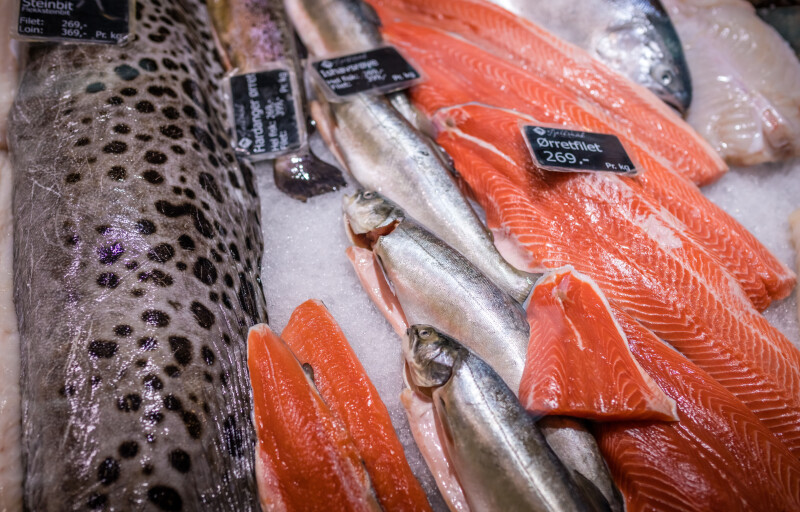
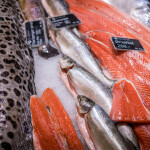
The company recently began using certified organic farmed
salmon from Scotland for its Salmon Pad Thai and Teriyaki
Salmon, and McGowan says its flavor profile is "unbelievably
different from regular salmon. It is like eating butter."
Although the salmon costs Big Bowl about $3 more per pound
than regular farmed salmon, McGowan says the flavor and quality
is worth the price. The company also uses farmed salmon from
American Gold Seafoods in Anacortes, Wash. The company says it
does not use hormones or steroids in production of its
fish.
Big Bowl's bay scallops are flown in fresh from Maine, and
are never frozen. "We have received a really good reception to
the scallops," says McGowan.
One of the first major ingredients to undergo major review
on the menu was chicken, because it is used in 50 percent to 60
percent of the menu selections. "We found FreeBird [free-range
chicken] and, in our effort to be more sustainable, decided to
use the whole bird, white and dark meat," says McGowan. The
company also sources local produce when it is in season.
McGowan also switched from serving plastic bottled water
served in the restaurant, to new water filtration systems in
all eight stores. The concept made more sense to McGowan than
transporting water from Fiji or some other country, which can
have a large carbon footprint.
"I'm going to make sure I have great water and if guests
want water, it is free," says McGowan.
In addition, the restaurant company's recently revamped wine
list features organic, sustainable and biodynamic wines.
After the complete overhaul of Big Bowl's menu to natural,
sustainable items, McGowan began changing all of the company's
non-food items to more sustainable, eco-friendly products.
For example, all of its napkins, menus and paper products
used in its offices is recycled paper supplied by French Mill
Paper Co.
"One menu page probably costs us 5 to 7 cents more, but I
have eight stores, which helps
leverage price," says McGowan.
In addition, all of the chain's cleaning agents are
eco-friendly and its uniforms are made from organic cotton.
As Big Bowl has gradually changed over to higher quality,
sustainable ingredients, it has raised its prices by small
amounts, such as 50 cents more on some entrées. However, the
eatery has not experienced a decline in business, even in a
down economy.
"People are much more educated in terms of what they are
eating," says McGowan. "The people who do their homework don't
mind that their lunch is going to cost 50 to 75 cents more;
they would rather get the quality."
In addition, Big Bowl's upscale-style entrées, such as Thai
Hot Pepper Shrimp with Basil & Peanuts, and Beef and
Broccoli with Light Wine Garlic Sauce, are priced from $10.95
to $13.95 per entrée. "The average check for lunch is $12 to
$13, and people tell us the quality is unbelievable for that
value," says McGowan.
Christine Blank is a business writer and editor in Lake
Mary, Fla.