

« February 2008 Table of Contents
In the Kitchen: Gulf Coast bounty
New Orleans' Grand Isle brings Dondis back to the bayou
By Joan M. Lang
February 01, 2008
Chef Joel Dondis grew up in Calcasieu Parish, in Lake
Charles, La., surrounded by water and steeped in the unique
culture of the Gulf Coast bayous. Even after attending cooking
school and working overseas, Dondis still returned to his
hometown roots.
"I'm a bayou boy from way back," he says. "Contraband Bayou
snaked through the back of my dad's property, and behind the
tennis club where I had my first job in the kitchen, picking
turtle meat for turtle soup. We were always in and around the
water, and I grew up with seafood."
Over the years, Dondis has established a folder full of
recipes, representing what he considered all the best examples
of South Louisiana food, from oysters Rockefeller to gumbo. He
attended the Culinary Institute of America, and then traveled
and worked in Europe, returning to New Orleans to work for the
Brennan family and then at Emeril's. The recipe folder grew. He
founded a catering company in 2000, then a casual
French-influenced restaurant called La Petite Grocery in 2004
and the dessert boutique Sucre in April 2007.
Last summer he dusted off the bulging folder and opened
Grand Isle, a seafood restaurant in the Harrah's Fulton Street
development in downtown New Orleans, coming full circle back to
the bayous. Inspired by the famed fishing village of the same
name, Grand Isle is all about the cultural and culinary
traditions of Louisiana's Gulf Coast.
Dondis reproduced old photographs by Fonville Winans, who
studied the daily lives of Louisiana's oyster farmers,
shrimpers and fisherman in the 1930s. The photos set an
evocative stage for a rustic dining room that also incorporates
weathered pecky cypress with mosaic tiles and marble. The
seafood-centric menu celebrates the bounty of the Gulf Coast:
oysters, crab, shrimp, crawfish, trout, redfish and
amberjack.
"I wanted the food to be straightforward and honest, not
fancy with five different ingredients on top of it," says
Dondis. "We have a fairly large menu,
but only two of the
seafood products are non-local: calamari
and lobster."
Over the years, Dondis has cultivated close relationships
with like-minded local purveyors, including P&J Oyster Co.,
New Orleans Fish House and Harlon's LA Fish.
"I worked with New Orleans Fish House at Emeril's, when they
were just getting started," he says. "That counts for a
lot."
So does his menuing strategy, which includes three to five
daily fresh fish specials that account for up to 40 percent of
sales at any given time: Seafood accounts for 80 to 90 percent
of total sales. This allows him to buy - and move - whatever
his purveyors offer him, as long as it's from the western
Gulf.
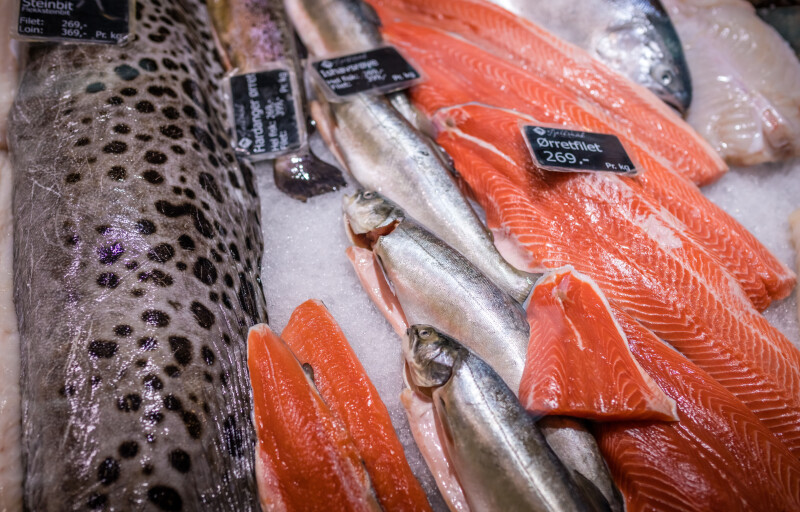
"I'm not just going for redfish," he says. He'll take
tripletail, black drum and sheepshead, absolutely fresh and in
small enough quantities that he can sell quickly.
"Strange, but it's not easy to get good fresh fish in a
restaurant - many places use frozen," says Dondis. "But I'll
buy a small quantity of four or five different kinds of fish,
maybe 20 or 30 pieces, and be able to sell it. That way I'm not
100 pieces deep into one variety of fish and have to worry
about selling it all.
"Because what happens when you have to wait another day to
sell your fish?" he adds rhetorically. "It's not going to be as
fresh, and people aren't going to like it."
Not only is that good for Dondis and his purveyors, but it's
also good for customers. "If you buy fresh fish and prepare it
with care, customers will like it," he says. "People who have
an issue with fish got a bad piece of it along the way - it
wasn't fresh or it wasn't prepared correctly."
Dondis and his customers are keenly aware of the pressures
commercial fishing puts on the Gulf Coast ecosystem. "They know
there's only so much to go around, so they're willing to try
new varieties," he says. "We work real hard on our prep so we
treat the fish right and customers have a good experience."
Hearty amberjack, for instance, can be grilled, while the
more delicate sheepshead is sautéed. And customers have a
choice of sauces, including lemon beurre blanc, Creole
meunière, hollandaise and roasted shrimp, which is made from
the shells in the classic French manner, as well as an optional
topping of crabmeat, for true Louisiana style.
As important as the fresh fish of the day program is,
however, Grand Isle is also gaining a reputation for some of
its signature dishes, including three different kinds of baked
oysters, crawfish boiled and Cardinale-style, softshell crabs
in season, shrimp with remoulade sauce, potted crab, fried
shrimp and oysters and a full complement of raw-bar and cold
seafood. There's turtle stew (made with pulled turtle meat and
oxtail so it's really hearty) and camp-style seafood gumbo, the
kind of thin but flavorful soup-stew that's made with the
sportsman's catch up and down the Gulf Coast.
"Gumbo is regional, even within Louisiana," explains Dondis.
"I grew up with it kinda thin, made with a light roux and not
thick with a lot of garnish. And in Lake Charles, if you make a
duck gumbo, that's all it's got in it: duck. If it's seafood,
you don't put andouille sausage in it." Grand Isle's is made
with shrimp, oysters and crabmeat, plus a mound of flavorful
popcorn rice, a local variety of rice that was first grown by
his sister-in-law's family.
Dondis thinks Grand Isle may have the legs to support
additional locations, perhaps in Mississippi or elsewhere on
the Gulf Coast. But right now, he's concentrating on getting
all the details right. "We're super focused on ironing out the
service, and getting our quality and operations just where they
need to be," he says.
Contributing Editor Joan M. Lang lives in Cape Elizabeth,
Maine