

« August 2008 Table of Contents
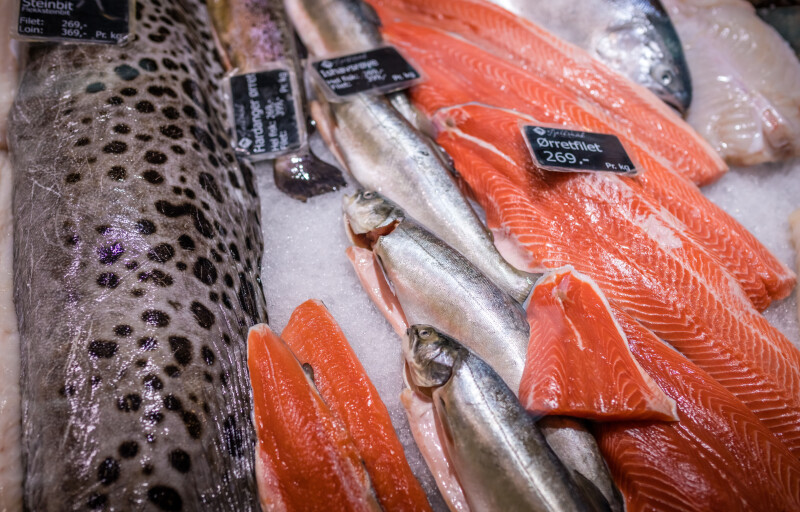
Product Spotlight: Sablefish
High Japanese demand keeps U.S. supply low
By April Forristall
August 01, 2008
In 2002, trade and consumer restaurant magazines pegged
sablefish as the next "hot" fish. Six years later, results are
mixed on whether the species, also known as black cod or
butterfish, will fulfill that prediction.
Sablefish's popularity escalated when sustainability
organizations touted it as a replacement for species like
Chilean sea bass, which is subject to poaching.
"Sablefish was a great answer to Chilean sea bass when the
issues started arising … it was a great opportunity because it
provided the same nice buttery, fatty, oil content," says Wade
Wiestling, VP of culinary development at The Oceanaire Seafood
Room in Minneapolis.
"All the sablefish used to go to Japan. Now a lot more is
going into the U.S. market because chefs discovered it," says
Laura Fleming, media relations director at the Alaska Seafood
Marketing Institute.
However, despite rising domestic demand, about
three-quarters of the world's sablefish supply ends up in
Japan.
"The vast majority goes to Japan. I don't know if U.S.
interest would ever compete," says Richard Martin, president of
Martin International Corp. in Boston. "I don't know that
there's enough tonnage in the United States [to allow it to
enter the mainstream market]."
According to the National Marine Fisheries Service, landings
of Alaska sablefish through July 15 totaled 19.7 million
pounds, roughly two-thirds of the 30-million-pound total
allowable catch (TAC) for the 2008 season. Like halibut,
sablefish is an IFQ (individual fishing quota) fishery.
Sablefish imports from Canada through May totaled 174,875
pounds, more than 100,000 pounds less last year.
Sablefish landings have a distinct peak in the spring. The
fishery kicks off in mid-March, but more than half of the TAC
is landed between April and June, with 20 percent or more
normally landed in May and June. The sablefish TAC has been
declining moderately, but steadily, from the 12-year high in
2004 of 38 million pounds.
Fleming isn't worried about the slight supply
reductions.
"Seasonality and fluctuating harvest from year to year are a
part of wild capture fisheries, and sustainability has its own
built-in price," she says. "If the number of fish goes down,
the fisheries manager will err on the side of caution and
reduce the commercial harvest."
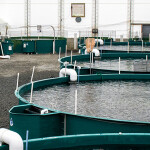
One Canadian aquaculture company aims to supplement the wild
sablefish supply with farmed product.
Kyuquot Sound Sablefish put its first fish in the water in
2005.
"Sablefish is one of the most valuable whitefish from an
aquaculture point of view," says Bruce Morton, president of
Kyuquot Sound in British Columbia. "It's interesting, because
there are two markets: the Asian market and the Western white
tablecloth. The Eastern market will pay premium; they adore the
fish."
But Joe Collins, Kyuquot Sound's sales and marketing
manager, says that the farm is still in its early stages and
they don't yet have the supply to develop a significant U.S.
market. The company currently sells about 3,000 to 5,000 pounds
in the country weekly and, he says, "it's slowly gaining speed.
It's new and exciting and it's been a long time since there's
been a new farmed fish for mass market."
The sablefish market is sensitive to supply, and with the
Alaska TAC reduction in 2008, prices appear to be
responding.
Alaska sablefish wholesaled for about $5.99 a pound 10 years
ago, and now the price is north of $10, notes Wiestling.
Oceanaire's locations in Baltimore, Washington, D.C., Orlando,
Fla., Houston and Seattle menu sablefish. While the increase
signals a rise in recognition, the cost is still too hefty for
casual-dining restaurants and conventional supermarkets. But
the species, at $26 to $36 a plate, excels in the
whitetablecloth arena.
"When we have [sablefish], it sells like wildfire. It's so
mild and rich and buttery, and it's got a nice tender flake to
it," says Wiestling. "Guests who have had it before will come
back for it."
And Martin, whose company distributes the fish to both
foodservice clients and under the Black Pearl brand to retail
markets, including Whole Foods, says the species' popularity
has "grown and grown." Price may keep sablefish out of casual
restaurants and mainstream supermarkets, but Martin is seeing
positive results in large retail outlets, pointing out that
sales have increased 10 to 15 percent.
Sablefish probably won't leave the fine-dining niche any
time soon, but the days of people only seeing it as a
substitute for Chilean sea bass are waning. Sablefish is one of
the most highly valued fish in Alaska, and eventually
aquaculture efforts may lessen supply issues and help the fish
reach a broader audience.
Editorial Assistant April Forristall can be e-mailed at
aforristall@divcom .com