


« July 2009 Table of Contents
One on One: Albert Tacon
By James Wright
July 01, 2009
The way Albert Tacon sees it, farming the world's oceans to
supply fish for a steadily growing population is not optional.
Hence, the major question is not if - but how - to nurture the
aquaculture industry
to maturity. A leading aquaculture
researcher, Tacon has seen and heard plenty of resistance to
fish farming. But the walls preventing aquaculture's growth
will soon crumble, he predicts, even in places where open-water
fish pens are forbidden.
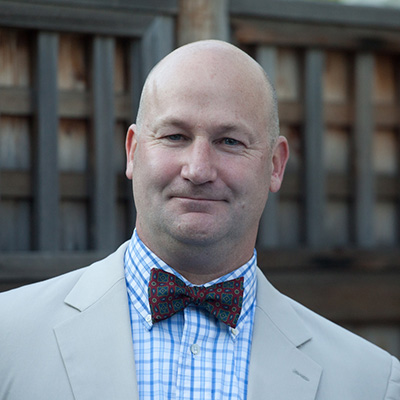
Tacon, 57, is widely considered one of the world's top
experts on aquaculture and aquatic feed technology, having
worked for the United Nations' Food and Agriculture
Organization in Italy, Brazil and Indonesia, and as director of
the Aquatic Feeds and Nutrition Program at the Oceanic
Institute in Waimanalo, Hawaii. After serving the past several
years as aquaculture coordinator at the University of Hawaii in
Hilo, Tacon will embark on a new challenge this fall with a
nine-month appointment as visiting professor at the University
of Las Palmas on Gran Canaria, the largest of Spain's Canary
Islands. "It's just like Hawaii," says Tacon. "Another island
in the middle of nowhere."
Much has changed in the 35 years Tacon has devoted to
aquaculture research, but some things never seem to: While
aquaculture has been successfully embraced by developing
nations as a viable means of food production and as an economic
driver, it remains somewhat taboo in the developed markets like
the United States, where much of that fish is consumed.
Concerns about sustainability are one reason why some U.S.
consumers frown upon farmed fish, especially carnivorous
species like salmon that depend on fishmeal made from wild fish
stocks. That's why Tacon has focused his energy on aquaculture
feed and has lent his insight to commercial fish farming
operations. Kona Blue Water Farms of Kailua-Kona, Hawaii, which
raises trademarked Kona Kampachi in open-net pens off the coast
of Hawaii's main island, consulted with Tacon in recent years
as it sought to reduce the fishmeal ratio of its feed.
I caught up with Tacon, who hails from England, in mid-May
to talk about fish farming, cultural attitudes toward
aquaculture and the potential of raising fish in places such as
- brace yourselves - Alaska.
WRIGHT: How important is aquaculture to the world's food
supply?
TACON: First of all, aquaculture is no different from
agriculture - it's just in the water. Rice is no different from
catfish or tilapia or shellfish. Salmon and shrimp are the cash
crops, like coffee. We all want a cash crop at maximum profit.
But in Asia, it's a mixture of both staples and export market
products. The ocean holds so much potential for growth. Global
aquaculture production in 2007 was 66 million tons, worth $90
billion; 91 percent of that was in developing countries,
two-thirds in China. It's basically still an Asian phenomenon.
Chile, which has come from nowhere in just 20 years, is No. 10
but second in value only to China, which has 2,000 years of
experience producing fish.
How far has aquaculture
come in the last 35 years?
In practice in Europe since Roman times, it's only recently
grown as an industry, but by leaps and bounds as with the
agricultural revolution. It's only been a big industry in Asia,
particularly China. Since 1950, and compared to any other food
product like maize, soy, wheat or poultry, the production of
farmed aquatic products has been one of the fastest-growing
food sectors, second only to organic. But the main export
markets are still limited to the United States,
Europe and
Japan.
Why so much apprehension concerning aquaculture?
It's not only the United States - it's Canada, too, and it's
a shame. A lot of it has to do with sport fisheries in affluent
countries and tradition. With agriculture, we know there are
areas where we produce our food, our recreation, our cities;
but we don't want to see anything floating in the water. In
China, a fish farm is seen as no different from a field of
plants. For the rest of the world, aquaculture is not a
problem, but in the United States, with tourism, we need
various zones. It's forcing the industry to go offshore, but it
costs so much more money and you end up competing with
countries that don't have to go offshore. All we need is a good
management plan and we can do it in a sustainable way.
It's mainly a problem of North America and Europe - the
environmentalists are very concerned, some rightly so. What we
do with the sea must be very transparent so the public has
confidence. It's the consumer that calls the shots, by buying
the products or not. At the end of the day, we need to produce
fish and the government's got to create an enabling
environment.
What species are especially challenging to farm
commercially?
Salmon and trout need very clean water at a certain
temperature, so there are only a few areas to grow them. The
greatest potential is in Alaska. They have the largest fishery
in the world there in pollock - the byproducts of which are
essentially thrown away. There they have all the right
conditions. Politically, their law says they won't do it. Think
of coldwater species: halibut, salmon, cod - Alaska could
produce so much, Canada too.
Do you really think Alaska
will one day allow
aquaculture?
You bet. One day they will learn. It has the coastline, the
water, the inputs and the conditions for growing the kinds of
species consumers like. And aquaculture employs people. Of
course, aquaculture, like agriculture, has an environmental
impact. But we need to produce our food. You just need the
public on your side, and we have a lot of education to do.
Where else in the United States
can aquaculture
flourish?
There is potential in Maine. The problem there has been
environmental concerns, which are forcing the industry to go
offshore. But if it does, it won't be competitive. Add up the
cost of energy and the cost of labor, and we have no advantage.
But the water is at the right temperature. [Objection is] a
cultural thing. You change it by getting the local people into
the operations.
How important are aquaculture certification standards?
Standards are an integral part of developing codes for
responsible fisheries and aquaculture development. It's
important there's more harmonization if possible. We have to
educate the public on seafood and how it is produced.
Associate Editor James Wright can be
e-mailed at
jwright@divcom.com