
« January 2009 Table of Contents
One on One: Don Miller
By Steven Hedlund
January 01, 2009
Years ago, "dorm food" wasn't exactly worth writing home
about. Simply a means to fuel voracious academics, campus
dining offered little in the way of taste and variety.
Fortunately, the days of mystery meat and tuna surprise are a
distant memory. Today, campus dining is not only a culinary
experience but also a learning experience. At colleges and
universities nationwide, students learn about nutrition, the
origin of food and sustainability in dining halls and
classrooms.
The mastermind behind the culinary experience at the
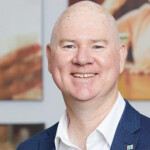
University of Notre Dame in South Bend, Ind., is Don Miller.
Like so many accomplished chefs, the Racine, Wis., native's
foodservice career began in his teens, busing tables and
washing dishes. After graduating from the Culinary Institute of
America in Hyde Park, N.Y., in 1976, Miller went on to open the
kitchens at two esteemed resort hotels: the Opryland in
Nashville, Tenn., and the Sandestin in Destin, Fla. In 1982, he
landed at Joliet Junior College in Joliet, Ill., teaching
culinary arts there for five years.
For the past 21 years, Miller, 54, has worked at Notre Dame,
starting as executive chef of its hotel and conference center.
Since then, he has earned numerous accolades, including the
American Culinary Federation's 2003 Chef of the Year, Central
Region. Now, as Notre Dame's executive chef, a position he's
held since 2004, Miller is responsible for maintaining the
university's culinary integrity. That includes ensuring more
than 17,000 staff, faculty and students are aptly fed.
Miller's responsibilities include ensuring the food served
at Notre Dame is produced in an environmentally and socially
responsible manner. Lately, seafood sustainability has been top
of mind for Miller. In late November, Notre Dame received
chain-of-custody certification from the Marine Stewardship
Council, allowing it to serve seafood bearing the MSC
eco-label. I talked to Miller in early December, right after he
spoke at a "Food Fights" class.
HEDLUND: What's challenging about serving seafood at an
academic institute?
MILLER: This is why a lot of university chefs have hotel
backgrounds, because hotels do a lot of catering. Restaurants
are à la carte; you react. At hotels and banquets, you have 500
people, so you have to pay attention to carryover cooking. And
that's not unlike dining halls. You can't cook to order. So we
do what you call batch cooking. That may sound hard, but it's
not. We've got it zeroed in pretty tight. In fact, right now
I'm revisiting
our batch-cooking methodology, looking to
increase it, especially in seafood. Seafood is all about
moisture. So you really have to be on top of it.
What percentage of
Notre Dame students eat seafood?
We do 10,000 meals per day. Of that 10,000, we do 2,000 at
breakfast, 4,000 at lunch and 4,000 at dinner. We know that 8
to 10 percent of students are going to eat seafood [at lunch
and dinner]. You're talking about 250 pounds of seafood in each
dining hall per meal period, or roughly 1,000 pounds a day.
Then there's Lent. Our fish counts go way up during Lent, since
we're a Catholic university.
What are students'
favorite seafood species?
No. 1 is tuna, primarily tuna salad. We go through a lot of
albacore. No. 2 is salmon and No. 3 is tilapia.
What is the student
body's perception of:
Nutrition? There's a lot more awareness of diet than when I
was a student. They care more about what they're eating, to
some degree. You know kids. They need their fuel; they're going
to carb up. But more are looking at healthy food choices,
understanding that that will lead to a more active
lifestyle.
Sustainability? There are a lot of life science classes at
the university. Every semester, I'm a guest speaker at a class
called "Food Fights." It's about food and social issues. But
they're not talking about seafood, so I always bring it up.
What are your
responsibilities as executive chef?
My primary responsibility is maintaining the integrity of
the foodservice operation. We have 500 to 600 employees,
including 40 managers. So it's impossible for me to be
everywhere. I spend about 35 percent of my time teaching and
training. We have a test kitchen that I directly oversee, so
I'm very involved in research and development. Just about
everything that's served on campus originates from the test
kitchen.
I have my administrative responsibilities as well. I'm very
involved in [food's role in] environmental and social
responsibility. I'm concerned that we're not thinking enough
about seafood. I think it's because you can't see it. Out of
sight, out of mind.
When did seafood sustainability
pop up on your radar
screen?
I put Chilean sea bass on the menu of a board of trustees
banquet, and someone sent a letter directly to [former Notre
Dame President Edward Malloy] just lambasting me. This is 10 or
15 years ago. Father Malloy forwarded it to me but never said a
word to me about it. That's about when I met Bob Sullivan
[president of The Plitt Co. in Chicago], and he turned me on to
seafood sustainability. He's very knowledgeable.
Now that Notre Dame has MSC chain-of-custody certification,
what's next?
The next step is to get it up and running. We just brought
in our first two loads [of MSC-labeled seafood]: salmon and
pollock from Alaska, 2,000 pounds each. I'm responsible for
integrating it into our operations, making sure we track it
through our system and maintain the MSC standards. I'm
passionate about it. I'm fortunate that our foodservice
director, Dave Prentkowski, is, too. Without his support, I
don't think we'd be here right now.
SeafoodSource Editor Steven Hedlund can be e-mailed at
shedlund@divcom.com