


« February 2009 Table of Contents
Vision on hold
Ruth's Chris struggles to realize Mitchell's vision to
be a national brand
By Lisa Duchene
February 01, 2009
Say you're in Louisville, Ky., and suffering a serious fish
craving. You'd soon be licking your chops and punching Summit
Plaza into the GPS after spotting this from local About.com
writer Jessica Elliot:
"We were very happy with the food and service at Mitchell's
Fish Market. The prices were surprisingly reasonable
considering the restaurant's location, especially for fresh
fish, a rarity in this area.
I'd definitely recommend any fish
lover to try it out."
This particular blog is testament to how Mitchell's Fish
Market has cultivated a solid reputation and loyal following
during its growth from one to 19 restaurants in nine Eastern
states over the past decade.
In February 2008, founder Cameron
Mitchell of the namesake Cameron Mitchell Restaurants based in
Columbus, Ohio, sold the chain and three steakhouses for $92
million to Ruth's Chris Steak House, based in Heathrow,
Fla.
The deal gave Ruth's entry into the upscale seafood
restaurant market via an established player with national
expansion potential.
In the year since, the dismal economy hit the fine-dining
segment hard, Mitchell's tapped new leadership and ultimately
put expansion plans for 2009 on hold. All this begs the
question: Will Mitchell's be able to hang onto the fresh fish
flair that made it famous and realize its vision to be a
national brand?
It will if Tom Burmane has his way. The chain's VP of
operations began his Fish Market career nine years ago when
restaurant No. 3 opened in Pittsburgh and has shepherded the
concept through the ownership transition. He acknowledges the
economic climate poses great challenges.
Previous recessions meant you just worked harder, he says,
but these times call everything into question.
"How can we change the way we do business without changing
those things fundamental to our success?" says Burmane. "We are
considering a completely different approach to purchasing and
distribution. We haven't figured out what that means yet, but
that's what we're looking at and in the process, we're really
focusing on being brilliant with the basics."
Employees come first
Mitchell's will not compromise any of its core philosophies
and values - like putting its associates first - that have led
to its success, vows Burmane. "And we've always been
uncompromising about the quality we put on the plate."
Each restaurant has a chef, a scratch kitchen and a menu
that varies by location.
"We are a chef-driven concept. We're making everything
in-house from scratch, not cutting open a bag," says Will
Wadsworth, a regional executive chef who oversees half the
restaurants.
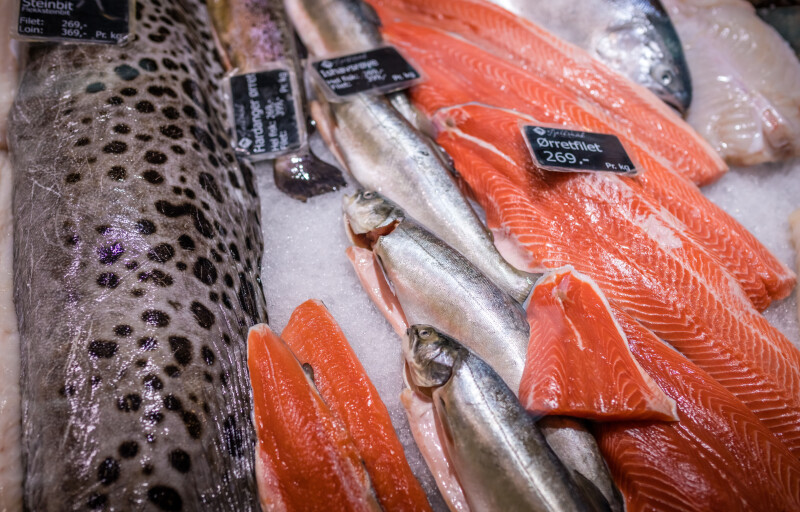
A typical Mitchell's menu offers 80 items. About two dozen
of those change daily: a dozen fresh fish species, four to six
oyster varieties and several "chef's special" dishes. Forty
percent of guest orders are off the fresh fish list.
Top-selling entrées include cedar-planked salmon with
roasted vegetables and a grilled portabello relish, and shrimp
and scallops pan-roasted in a shellfish butter sauce, served
over oven-roasted potatoes and tossed with spinach. The
signature dish is the "Shang Hai preparation," in which
Mitchell's steams fresh fish with ginger and serves it with
sautéed spinach, sweet sticky rice and a rice wine soy
sauce.
Key to the menu, says Burmane, is the balance of "fish
forward" simple preparations (broiled, blackened, grilled and
Shang Hai) as well as more adventurous chef's specialties.
Chefs are required to stay within price points, the concept and
seasonality, but are otherwise free to create lunch and dinner
specials. The menu was recently updated in the fall with
oysters charbroiled New Orleans-style for $13.95 and pumpkin
seed-crusted tilapia for $18.95. Mitchell's has been
experimenting with a strategy of promoting four to six often
seasonal special items for a limited time, and is currently
pushing a lobster and shrimp potpie for $19.95. It will be
revamping its lunch menu this year with an eye on value.
The approach has worked beautifully. An online Cincinnati
restaurant review called Mitchell's "one of our regular seafood
joints because their dishes are fresh, delicious and reasonably
priced every time we visit."
That regular might be surprised to learn he doesn't actually
come first in the company's eyes. Rather, the associates come
first, by design.
"We've always felt [our associates] were the central focus
of our company and if we took great care of our associates,
they'd take great care of our guests and our guests would take
great care of our company," says Burmane. Or, in other words,
"The answer is 'yes.' When there is a request of us, no matter
what the request is we will do everything in our power to honor
that request. In a lot of restaurants today, that spirit is not
there."
If a guest wants a Coke, even though the restaurants serve
Pepsi products, a server runs across the street to get a Coke.
If a customer wants a chocolate dessert other than what's on
the menu, staff run to a nearby ice cream shop to get fixings
for a simple chocolate dessert. And the kitchen will often make
a dish no longer on the menu if a customer is craving it, says
Burmane.
Taken literally, there are situa-tions in which the answer
isn't absolutely yes, he says. But it's never "no," says
Burmane. "It's a mindset. It isn't as difficult as you might
think it is. It's definitely a question of training and
culture, of recognizing opportunity and answering creatively."
The stories and examples are retold around the company and take
on a life of their own, reinforcing the attitude, says
Burmane.
To be on the diner's end of such a request often yields
appreciation. A Seattle blogger, for example, visited the
Mitchell's in Tampa, Fla., and was impressed and appreciative
when her waitress ran back and forth to the kitchen to attempt
to answer sustainable-seafood questions. (She didn't have a lot
of answers, but received an A for effort and a healthy tip for
her trouble.)
Buckling up for a rough ride
You have to wonder, though, how the Mitchell's approach will
fare under Ruth's control in this dismal economic climate. The
fine-dining segment has been struggling since 2006, says Bonnie
Riggs, a restaurant-industry analyst with the NPD Group
market-research firm based in Port Washington, N.Y.
Overall
restaurant industry traffic was down 1 percent for September to
November 2008 compared to the same period in 2007, and fine
dining traffic dropped 2 percent in the same period. White
tablecloth restaurants are struggling to convince consumers
they represent value, says Riggs, and even recent deep
promotions haven't been effective. NPD data shows the amount of
promotion-related fine dining traffic dropped 5 percent for
September to November 2008 compared to the same period in
2007.
Ruth's Chris' preliminary 2008 fourth-quarter comparable
restaurant sales dropped 18.5 percent and Mitchell's average
weekly sales fell 17.5 percent from $82,400 to $67,900 compared
to the fourth quarter in 2007. The results indicate the sales
slide is not only
continuing, but growing deeper. In the third
quarter, Ruth's comparable sales fell 6.9 percent and
Mitchell's average weekly sales fell to $77,100 from $83,800,
compared to the third quarter of 2007.
Ruth's CEO and President Michael O'Donnell warned investors
the company believes by the end of March it will be in
violation of a leverage covenant, or a condition of its
lenders, and is proactively working on new terms, a position
several restaurant companies have recently faced. O'Donnell - a
former CEO of Sbarro and chief of new business at Outback
Steakhouse, owned by OSI Restaurant Partners - was appointed in
August following the April departure of Ruth's Chairman,
President and CEO Craig Miller.
As he announced third-quarter earnings results to investors
in early November, O'Donnell talked about Ruth's efforts to
manage through a prolonged recession and cut costs.
"We are examining every process we undertake in our support
centers and in the restaurants and are asking, 'Do we need to
do this? Can we be more effective? Can we do it less
expensively?' We know that in this environment, the consumer
will not pay for the inefficiencies of an organization," says
O'Donnell.
A good fit
Burmane acknowledges the fine line Mitchell's is walking as
it rallies every employee to operate as efficiently as
possible. "I think we've run things pretty lean and mean," says
Burmane. "There wasn't a lot of low-hanging fruit and there
wasn't a lot of fat that could be cut."
When Cameron Mitchell put the seafood chain on the market
two years ago, it was scary, says Burmane. "We've all worked so
hard and dedicated a number of years of our career to building
the Fish Market and we have so much pride in it." As Ruth's
emerged as the new owner, says Burmane, there was a great sense
of relief as the companies have similar histories - Ruth Fertel
mortgaged her home in 1965 to buy the Chris Steak House in New
Orleans - and similar cultures since they were built by
entrepreneurs committed to hospitality and their people,
rather than by "empire-builders."
One key to Mitchell's success is giving chefs freedom to run
their restaurants. "We find that in the right environment you
can have both freedom and consistency," says Burmane. Ruth's
has said it plans to operate Mitchell's as a "distinct entity"
while giving brand management and development expertise.
Burmane says that pledge has proved true: "Nobody has come
in and tried to change what we do."
Any entrepreneurial company's culture is at risk when it
becomes part of a larger company, says Bryan Elliott, a
restaurant industry analyst with Raymond James & Assoc. in
St. Petersburg, Fla. Elliott notes Mitchell's is answering to
new leadership - O'Donnell and Sam Tancredi, a 30-year
restaurant industry veteran and former president of nine
Bonefish Grill restaurants, appointed in early December as
Mitchell's senior VP and COO.
The sale places Mitchell's in a better financial position to
ride out the recession, says Elliott, since Ruth's has a close
relationship with a private equity firm that can, if necessary,
make resources available to both brands, serving as a financial
safety net. "I think we're a long way from that," says Elliott.
And the risk that Ruth's will over-tinker with Mitchell's is
low. "The Ruth's people are very cognizant of the fact that
they need to maintain the quality and positioning of the brand
or they destroy what they paid a lot of money to buy," says
Elliott.
As for future growth, Ruth's officials have stated
Mitchell's can grow to at least 100 restaurants, and there is
opportunity for expansion and market-share gains in the upscale
seafood dining sector, including in the Southeast and in
coastal regions where seafood consumption is 30 to 40 percent
higher than Mitchell's Midwest home turf. With careful growth,
Ruth's says "we can establish our position as the dominant
player in high-end seafood and high-end steak."
A market-share battle with competitors Legal Sea Foods,
McCormick & Schmick's and Oceanaire Seafood Room will have
to wait. For now, Ruth's is focused on possibly building one
Mitchell's Fish Market in Orlando, Fla., near its corporate
headquarters, and maintaining its brand and business during the
recession.
"We're pretty fortunate, all things considered," says
Burmane. "If we stay focused on what we do and what we do well,
we'll weather the storm."
Contributing Editor Lisa Duchene lives in Bellefonte,
Pa.