
« February 2009 Table of Contents
Spotlight: Tracking technology
Systems that provide A-to-Z product history can save time, money along entire supply chain
By Lauren Kramer
February 01, 2009
Product tracking is an integral part of the seafood
industry, a process that, if done efficiently, can save time,
money and headaches in the future. Whether for monitoring
inventory, tracking the movement of seafood from origin to
point of purchase or understanding shrinkage points,
implementing a good tracking system makes great business sense
every step of the way.
Like many seafood processors, David Brindle, plant manager
at Pacific Star Seafoods in Kenai, Alaska, needed help tracking
production, warehousing and shipments for the salmon and
groundfish his company processes. When Pacific Star purchased a
system called Seafood Inventory Management with Barcode
Accuracy (SIMBA) five years ago, the tracking system answered
all of the company's needs.
"We have it in place as a tracking inventory system that
also enables us to comply with recall regulations," Brindle
says. "While we've not had to deal with any recalls, we've done
some sample recall work and self-auditing with the system, and
it works extremely well. It's relatively simple to train people
to operate the system, and Dynamic Systems offers good
support."
Based in Redmond, Wash., Dynamic Systems markets SIMBA to
the seafood industry as a plant tracking system.
"This system allows plant owners to start tracking product
as it comes into the factory," says Kevin Cook, Dynamic's
account manager.
SIMBA costs approximately $25,000 for a typical two-line
production system, which includes hardware, software, training
and support. One of its key features is a touch-screen computer
at the point of production that features easy-to-identify
icons.
"If your employees don't speak English, they can still
easily recognize the product attributes on the screen," Cook
says.
The computer is attached to a dedicated bar code label
printer. When processors start boxing fish they can assign
variable attributes to it, such as the number of fish in the
box, the owner code, production area and catch vessel. When the
information is filled, a compliance bar code label is printed
for the box so that when it is shipped the product has an
easily recognizable history.
"This system basically offers a cradle-to-grave solution for
capturing product information," Cook says.
Among Dynamic's large clients are Trident Seafoods and Ocean
Beauty, but SIMBA is also used by a host of smaller seafood
processing plants and cold storage companies that handle fresh
and frozen seafood and canned salmon. The most recent change to
SIMBA is its adaptation to automated sorting equipment used by
seafood processors.
"We're using a RYCO system grader now to sort fish on size
and accumulate them until they reach a planned box weight,"
says Cook. "The only area SIMBA doesn't cover is accounting, so
many of our customers will use an export feature to send data
to their host computer accounting systems. SIMBA can be
synchronized with systems like JD Edward, CatchManager and
Great Plains, and we help feed the data stream, but we don't
pretend to do accounting or sales."
NetYield is another tracking program for the seafood
industry, manufactured and sold by LAN Info Systems in
Plymouth, Mass. The company "specializes in managing
weight-based inventory for companies that buy raw materials in
one form and sell them in another," says Mark Bennie, CEO.
"It can be as simple as a single person buying fish on a
dock with his laptop, to large clients like Ocean Beauty, which
uses 32 versions of NetYield."
Like SIMBA, NetYield is geared toward users who may not have
a college degree or who speak English as a second language. The
software program, which costs $1,995 per user, uses simple
coding schemes to enable users to recognize what product is
turned into another. Training time depends on the complexity of
a company's needs. "We provide about 10 hours of training per
user, but not every user needs that much," Bennie says.
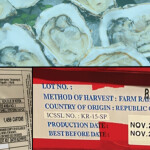
When a processor acquires product, NetYield enables the
tracking of its attributes, including date of acquisition,
country of origin and in the case of shellfish, data such as
the harvest area and date and the license number of the
harvester.
"Most of the time our customers store that information on
the computer until they're ready to repackage or resell the
product, at which point they'll create a barcode," says
Bennie.
These days, NetYield is implementing changes as food
manufacturers move gradually from the Electronic Data
Interchange standard of company-to-company communication to the
XML system.
"For awhile it will be both," says Bennie. "Most of the
supermarkets are still using EDI but we are seeing the
emergence of this new XML standard, which is going to be the
future."
Contributing Editor Lauren Kramer lives in British
Columbia