


« September 2009 Table of Contents
One on One: James Clark
By James Wright
September 01, 2009
James Clark is happy to be back home. After years of working
in kitchens all across the country - Georgia, Colorado,
Michigan and Washington, D.C., to name a few spots - the
talented chef has found a more permanent place in Myrtle Beach,
S.C., not far from his youthful stomping grounds in North
Carolina. Since coming to the Low Country in late 2007, Clark
has developed a passion for local fish and getting the word out
about sustainable seafood, one palate at a time.
Like many chefs, early culinary inspiration for Clark, 38,
came from his mother, who prepared wonderful seafood meals at
home like shrimp Creole. An avid outdoorsman, Clark's initial
experiences with cleaning fish came from the fruits of his own
rod and reel. But to become the chef he is now took years of
schooling and tutelage from acclaimed professionals - and even
a little white lie.
The fib came early on when he hoped to graduate from
dishwasher to cook at Sullivan's Restaurant on Sullivan's
Island, S.C. Clark had learned how to clean and cook fresh
marlin and other various wild fish at his second job, and
convinced Sullivan's owner that he would leave unless he was
promoted to the kitchen, which he soon was (it wasn't exactly
true, he says, but it worked). He quickly proved his worth and
his experience there gave him the motivation to pursue a more
ambitious culinary career. When he enrolled at the New England
Culinary Institute in Essex Junction, Vt., he met his future
wife, Marcey, a pastry chef, with whom he is raising two
daughters. "Love at first sight," he says.
Over the next decade or so, Clark jumped from restaurant to
restaurant to advance his skills, including an internship at
the Windsor Court Hotel in New Orleans and two separate
ventures in Charleston, S.C., with acclaimed chef Louis Osteen,
whom Clark considers his mentor.
"He's the forefather of Low Country cuisine," says Clark.
"He gave me insight on developing flavors and cooking
techniques, things I'd never thought of before. He basically
taught me what it means to be a good cook."
Now, as executive chef at the Marina Inn at Grand Dunes in
Myrtle Beach, Clark is calling the shots, which includes
sourcing all the various types of lesser-known fish like
amberjack, triggerfish, hog snapper and broomtail grouper, all
of which he says are responsibly harvested. I spoke with Clark
in July, shortly after he prepared a meal for Culinary
Institute of Charleston's Sustainable Fish Initiative
fund-raiser.
WRIGHT : How does your
day usually start?
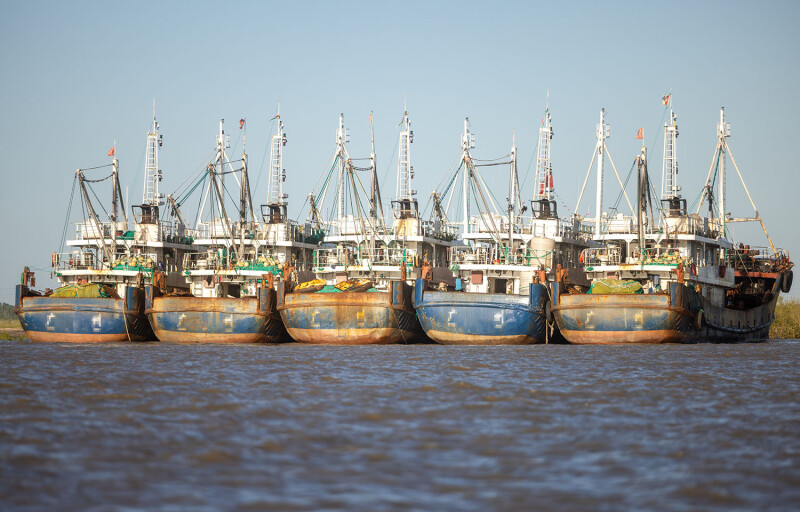
CLARK : First thing I do is roll over and call Wayne
[Mershon], owner of Kenyon Seafood in Murrells Inlet. He
sponsors the boats, takes care of the fishermen's dock fees and
ice and buys the fish from them. I call him to see what boats
are coming in, which could be from midnight to first thing in
the morning. Once they're ready, that's when I take the
25-minute drive there and watch them unload the boats. They're
all three- and four-day boats, tops, that run no further than
60 miles from the inlet. They have an assortment of fish like
mahi, wahoo, black bass, grouper and snapper.
Wayne has a few chefs he cuts fish for. I was introduced to
him by a purveyor whose fish was sent from Myrtle Beach to
Atlanta and then back again, which made no sense to me. So I
developed a relationship with Wayne to get the fish direct. I
get to learn everything about that day's catch, including the
boat, the gear they used, how long they were at sea and the
weather conditions they faced. It builds a story that I can
tell my guests.
How difficult is sourcing
sustainable local seafood?
It's probably one of the easiest things I buy. I'm having a
tougher time sourcing local produce than local fish. I also use
Livingston's Bulls Bay Seafood in McClellanville, S.C., where I
get fresh shrimp, clams and softshell crabs. Seafood has been
very easy; there are a lot of great resources and it wasn't too
hard to stumble across them.
Why such a focus on local seafood?
It's fresher and it helps support the local economy and the
quality is unmatched. And with the relationships you develop
with farmers and fishermen, you learn so much about what you're
cooking and serving. Everything I buy is domestic.
The day I found out I was going [to Windsor Court Hotel for
an internship], I knew my career had begun. It was a great time
to be there, because the chefs could get anything from around
the world, like beluga caviar. But that got way out of hand. I
read an article about a chef in Las Vegas who was bragging
about his monthly airfreight bills. I thought it was ludicrous.
I think that whole idea has been blown out. Buying as much as
you can locally has always been a better route to go.
What is your responsibility
regarding sustainable
seafood?
I take a lot of thought in staying away from things that are
not considered sustainable. I read a lot, but there's a lot of
information out there that is tough to make sense of. There's a
lot of conflicting information; it all needs to get on the same
page. I like to work with local fishermen who want to provide
people with sustainable seafood because they want to see their
businesses continue on and one day leave it to their
families.
What fish did you prepare for the Culinary Institute's
fund-raiser?
Triggerfish. It's a phenomenal fish, both the queen trigger
and the gray trigger. It's got white flesh but has a firm
texture, similar to lobster or monkfish. A lot of people had
never experienced it and they loved it. And there's plenty of
'em. Those are the fish that I always jump on, but those are
the ones the fishermen want to keep for themselves! They know
I'm an easy sell for cobia, scorpionfish and white grunts.
What is your customers' level
of sustainability
awareness?
It's low, and it needs to be expanded. I work on
sustainability with the servers, who can then reiterate that to
our guests. We rely on the guest-and-server connection. That
personal conversation about our vision is important.
Associate Editor James Wright can be e-mailed at
jwright@divcom.com