

May 2003 One on One
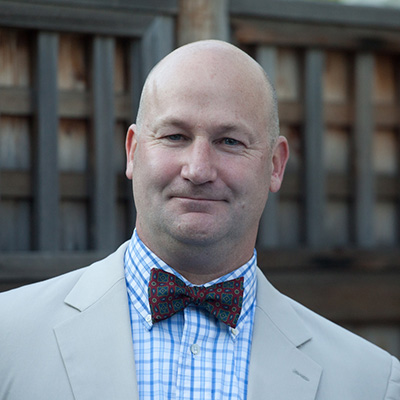
Jason Clay
Acting vice president, World Wildlife Fund
Most environmental groups regard shrimp farming as a destructive industry that merits being targeted for extinction. Greenpeace, for example, calls farmed shrimp "a devastating delicacy."
But amidst the heated rhetoric, Dr. Jason Clay is a voice of reason. "Shrimp farming isn't going to go away, so we have to make it better," is the way he sees it.
An anthropologist by training, Clay taught at Harvard and worked at the U.S. Department of Agriculture before joining the World Wildlife Fund, where he's spent almost 10 years researching the environmental impacts of shrimp farming.
I talked with Clay, the author of 12 books and more than 300 articles, about his efforts to change the way shrimp is farmed.
Redmayne: How did the Center for Conservation Innovation get involved with shrimp aquaculture?
Clay: About 10 years ago, I started to talk to people in the organization about the need to focus on the impact commodity production has on the environment and what we can do as an environmental group to reduce that impact or make [production] more sustainable.
The initial idea was to look at a broad range of industries, but fairly quickly I focused on agriculture and a couple of aquaculture commodities. In 1994, I was asked to prepare a review on the impact of shrimp trawling versus shrimp aquaculture and where should an organization like WWF focus its efforts in terms of either encouraging better practices or discouraging the worst ones.
What we came away feeling was that while both had significant impacts on the environment, it appeared that shrimp aquaculture producers actually had technology and some experiences in significantly reducing their impact on the environment.
We felt that if you looked toward the future, shrimp aquaculture is probably a much better way to produce shrimp than shrimp trawling, not just because of bycatch issues, but also because of the underwater disturbance caused by nets and the energy requirements for each kilo of shrimp produced. Once we came to that conclusion, then it became, "Well, what can we do to help make shrimp aquaculture better?"
And how have you gone about doing that?
First we had to get all the different people with different interests in
shrimp aquaculture to get on the same page in terms of what the impacts are.
Or at least what we know, what we don't know and what we agree on.
That process took two to three years. In that period, we were able to raise
some money and bring together a consortium that included the World Bank,
Food and Agriculture Organization, WWF and the National Aquaculture Centers
of Asia and the Pacific, based in Thailand.
Then we funded 30 case studies of operations and management practices. Between 130 and 150 researchers were involved in doing these projects, which were undertaken in about 20 different aquacultured- shrimp-producing countries.
You can find argumentation to support anything you want to say about shrimp aquaculture — good, bad or indifferent. So what we were really trying to do was to get to the truth of some of it, as opposed to just finding the data you wanted to support your argument.
What did you found out?
We found that eight or 10 practices
are the most significant, and they account for 70 to 80 percent of the impacts
that
most people care about. And of those,
only three to five are significant on any single operation. These would be
things like, "Is the operation built in the right place?" That's
the most significant issue.
There are estimates that as much as 90 percent of the subsequent environmental problems result from where you build the pond. If you put it in the wrong place, it's very hard to manage it well.
So then the question becomes, "What are these better practices that reduce or mitigate these impacts, and what do they cost and why aren't people using them?" What we began to find as we documented some of the financial implications was that a lot of the better practices really pay for themselves, some almost immediately.
Then why haven't more shrimp farmers adopted better practices?
Early
on, the major reasons that they weren't being adopted were: People didn't
know what they were, because it was a steep learning
curve; if they did know, it wasn't really in any farmer's interest
to necessarily tell his neighbor what his practices were, because he had
a competitive advantage; and the prices farmers were getting for their shrimp
were too high.
When the prices were too high, there was very little incentive
for people to change their practices, because if they were making good money,
why change?
Now a lot of things have changed. Shrimp prices aren't
so high anymore, and the producers who are surviving are the ones who are
a lot more efficient — and
efficiency by definition is better practices.
What we're finding now is that there is more of an interest in identifying and adopting better practices. There's also more willingness to let better practices be documented, because many players in the industry now realize that everybody's going to be tarred with the same brush.
Countries like Brazil are rapidly expanding their shrimp
aquaculture industry. Have they learned anything from the mistakes made in
other countries?
Yes and no. There are Brazilians who have been farming shrimp
for a long
time, and they've learned a lot. The problem is the new money that's
coming in. They haven't learned as much and they're more willing
to cut corners. They build on land that's more marginal because they
can get a few good crops in and make a good return on their investment immediately.
They don't manage their feed very well, so they create more stress
and they create diseases. It just takes one bad operator to ruin production
for many, many years. Look at Ecuador.
Has the WWF had much impact yet on shrimp farmers' practices?
No, we haven't.
We're just now beginning to turn that corner.
How do you plan to have an impact?
By working with producer
groups, associations and fisheries officials on better practices. Given the
decline in shrimp prices and the fact that so
many of these practices pay for themselves and increase the profits of companies
that adopt them, it should be a big seller.
Will WWF certify shrimp farms that follow what you have
identified as good practices?
We have no interest in running any kind of a
certification program and wouldn't
do it. What we're doing is side-by-side comparisons of the existing
shrimp aquaculture certification programs. There are maybe half a dozen of
them that are either in the marketplace or soon to be in the marketplace.
What we're finding when we evaluate them in light of the work that we've been doing is that none of them is addressing all the issues that we found to be key or significant. And many of them are addressing far too many issues. They're much more process focused, rather than product or results focused.
So now we're in the process of developing our own principles and criteria with measurable standards for each, because we think that could be the basis of a shrimp aquaculture certification program that would have credible results. Then, we'll try to get the certifiers to rethink and maybe rewrite their own standards.
Do you see shrimp farming ever getting a stamp of approval
from the environmental community?
Sure, if people adopt generally agreed upon
better practices. That's
what we're trying to do.