Species Spotlight: April 2001
Hoki
U.S. restaurateurs look to New Zealand to provide them with a steady supply of affordable whitefish
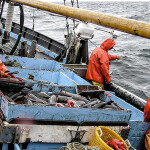
New Zealand hoki has a lot going for it. Although its no looker, the rat-tailed cousin of cod which is harvested year-round by South Pacific trawlers is one of the worlds best managed, most reliable whitefish resources.
Last month, New Zealand hoki became the first major whitefish fishery and fourth overall to be certified to use the Marine Stewardship Councils seafood eco-label (see Newsline story this issue, page 10), which will boost its already sterling image, says Simon Thomas of the New Zealand Seafood Industry Council.
Who thought 15 years ago that hoki would join the ranks of Western Australia rock lobster, Thames herring and Alaska salmon? Hoki wasnt recognized as a valuable whitefish resource until North Atlantic cod stocks crashed in the mid-1980s.
"We expect to see huge benefits in markets where consumers are increasingly conscientious about the need for sustainable harvests," adds James Mace of the Hoki Fishery Management Co., a coalition of New Zealand hoki quota holders charged with managing the resource.
"The fishery has been well managed for the past two decades."
New Zealands annual hoki harvest has totaled around 250,000 metric tons for the past few years.
Consistent availability has translated into stable prices that rarely vary more than 25 cents a pound. In early March, shatterpacks of frozen-at-sea fillets were wholesaling for $1.60 to $1.65, and shore-frozen fat-line-in fillets for $1.40. Defatted IQF fillets were tagged at $1.85 to $1.90, and blocks at $1.55 to $1.60.
Advances in trawling gear and techniques and processing equipment in the past few years have improved the quality of hoki products considerably. As a result, markets in the United States, Europe, Japan and Australia have expanded.
"The importance of hoki as a volume fish has emerged only in the past eight to 10 years," says Darryl Hamilton, North American marketing manager for Talleys Fisheries Ltd./Amaltal Fishing Co. in Motueka, New Zealand.
The United States imported half of the 86.5 million pounds of frozen hoki fillets New Zealand exported in 1999, trailed by Japan (14.8 million), Europe (13 million) and Australia (11.5 million). Two-thirds of the 50.6 million pounds of blocks were shipped to Europe, and nearly all 4.8 million pounds of hoki-based surimi went to Japan.
In Europe, blocks are used for value-added breaded products, such as fish sticks. And in Japan, crumbed hoki portions are a popular lunchbox snack with schoolchildren. Sealord Group Ltd., the worlds largest value-added hoki processor, was the first New Zealand company to produce "hoki fry" and cocktail-size "bites" for the Japanese market.
In the United States, hoki is used primarily in foodservice operations, though its seldom noted on menus. Fast-food chains like hoki for its versatility and interchange it with pollock or cod. Most Americans have no clue that hoki is often what theyre eating in fried-fish sandwiches and fish and chips.
Because hoki is rarely identified on menus, the lack of name recognition for the species poses a challenge for would-be sellers. And it doesnt help that "hokey" is slang for corny or mawkish.
A few retailers have had some success marketing hoki as blue hake. Hoki is also called New Zealand cod, whiting, whiptail and blue grenadier.
But the name is not the only deterrent for retailers, hoki fillets also have an unattractive strip of fat beneath the lateral line that must be removed.
For hoki to make the jump to the retail sector, more restaurants must identify hoki on their menus, explains Erna Reingold, president of Mermaid Seafoods in Greenwich, Conn. "Once that happens, if that happens, it will ensure continued growth in the U.S. market," she predicts. "But pollock still reigns supreme."
While hoki has yet to make inroads at retail, chefs prize the fish not only for its versatility but for its delicate, sweet flavor and moist, firm meat.
D.B. Hackers Seafood Cafe & Grill in Encinitas, Calif., began using hoki in its fried fish dinners, fish and chips, tacos and chowders more than a decade ago when cod became harder to find and more expensive. Now, owner John LaChance sells around 200 pounds of hoki per week.
The only downfall, he says, is the fat line, which makes hoki more labor intensive than other whitefish.
Californias Monterey Bay Aquarium a staunch proponent of sustainable fisheries switched from red snapper to hoki for the fish and chips at its Portola Café a few years ago.
The aquariums own seafood-buying guide, "Seafood Watch," deems snapper an overfished species. Portola Café opted instead for hoki, because its a well-managed fishery.
The café uses pre-battered hoki fillets. With the value-added product, chefs save time and avoid the mess of battering fillets themselves, says Executive Sous Chef Jeff Walker.
"Hoki is easy to work with," he asserts. "Its a really good product."
Walker goes through 80 to 150 pounds of hoki per week for the four 2-ounce fillets included in the $6.25 fish-and-chip dinner, one of the cafés top sellers.
The Down Under New Zealand Restaurant in Flagstaff, Ariz., however, recently went back to Pacific cod for its fish and chips, because the cod fillets are larger.
But, asserts Executive Chef Erik Burroughs, "I wanted to keep hoki because it fits our theme."
So he prepares hoki cakes with coconut cream, green onions and fresh basil, with a sweet chili sauce, as a lunch entrée and dinner appetizer for $6.95. In the three months hes offered hoki cakes, its been one of the top-selling appetizers.
"I never have any problems with consistency and availability," adds Burroughs.
Thats why a number of large restaurant chains have used hoki, to some extent, in their fried-fish fare. These include Darden Restaurants, Long John Silvers, Captain Ds, McDonalds and Dennys, say industry sources.
Hoki buyers keep close tabs on other whitefish supplies. When availability of pollock or Pacific cod drops and prices rise, demand for hoki increases.
The same applies for Latin American whiting, which is currently in short supply, notes Talleys Fisheries Hamilton.
Knowing that New Zealand is poised to continue production of quality hoki fillets comforts U.S. whitefish importers who market value-added products to foodservice operators, like Mermaid Seafoods Reingold.
"In this business, weve had some examples of poorly managed fisheries," she says. But Reingold is "absolutely thrilled" with the way New Zealand manages its hoki fishery.
All contents copyright ©1999 SeaFood Business magazine